
The bottleneck: creative velocity, not ideas
Agencies and in-house advertisers hit the same choke point when scaling video ads: concepting is fast, but turning a script into polished, platform-ready creative is slow. The usual culprits are camera logistics, turnaround for voiceovers, juggling multiple tools for subtitles/B-roll/music, and losing work across folders and platforms. The result: fewer variants, late creative tests, and wasted agency hours.
This article gives a step-by-step AI avatar workflow for B2B ads that fixes that bottleneck. It’s focused on a repeatable system you can run every campaign week to push more variants into testing with less friction.
Step-by-step AI avatar workflow for B2B ads
Define the test matrix
- Pick one core message (value prop) and 3 micro-variants (CTA, social proof, pain point).
- Define target audiences and placements (LinkedIn feed, YouTube, paid social short-form).
- Decide KPIs for each variant (CPL, CTR, demo requests).
Draft tight scripts (15–45 seconds)
- Use a three-part structure: hook (3–5s), value proposition (10–25s), CTA (3–5s).
- Keep sentences short and speakable. Read scripts aloud to time them.
Prepare avatar assets
- Select a high-quality image for the avatar (head-and-shoulders, neutral background).
- If using recorded audio, capture clean narration; otherwise plan TTS output or in-app narration.
Build the first draft in your AI video workstation
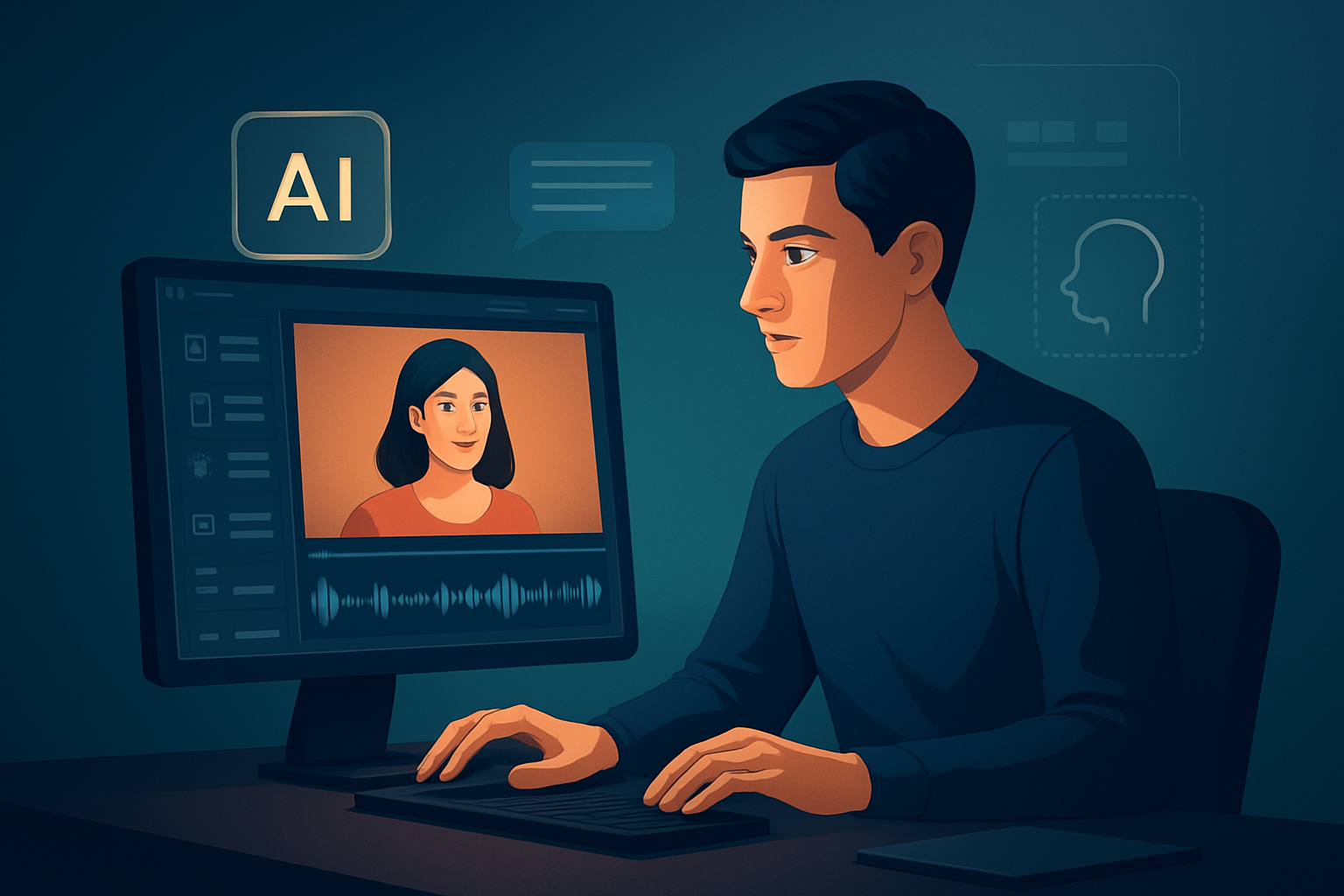
- Create a project and choose Avatar mode.
- Load the avatar image and paste or upload the script/audio.
- Generate a talking-avatar take. Use the app’s preview to confirm lip-sync and pacing.
Finish inside the same workspace
- Add title hooks, subtitles, and captions.
- Layer B-roll or product screenshots where needed.
- Apply visual polish (auto-zoom, face tracking, subtle color adjustments).
- Mix voice, music, and SFX; clean up audio noise and balance levels.
Export platform variants
- Produce landscape, portrait, and square previews for each variant.
- Generate thumbnails and short clips for A/B tests.
Validate and iterate
- Push the top 3–5 variants into paid tests.
- Use early performance to choose winners and create localized or retargeted derivatives.
Tools you’ll need
A Windows desktop AI video editor that combines avatar generation, editing, and finishing in one workspace (Shorz is one such option). It supports:
- Avatar mode: image + script or audio to produce talking-avatar videos.
- Local project and asset storage for reusable libraries.
- In-app audio, dubbing, music, noise cleanup, and audio mix controls.
- Finishing controls: subtitles, title hooks, B-roll overlays, auto-zoom, face tracking, multi-aspect previews, and thumbnail generation.
Script and copy tools (text editor, lightweight prompt library).
Asset sources (product screenshots, logos, B-roll clips).
Analytics / A/B testing platform for ad delivery and measurement.
Optional: external voice actors or TTS engines if you prefer voices not produced in-app.
If you want workflow variations for UGC-style or multi-language ads, see these references: AI Avatar Workflow for UGC-Style Ads, AI Avatar Workflow for Multi-Language Ads.
Common mistakes to avoid
- Shooting for cinematic quality when your placement is a small mobile ad. Keep visuals bold and readable.
- Ignoring aspect ratios. Always preview and export the same creative in square/portrait/landscape.
- Skipping subtitles. Most social views are muted; captions increase completion and message retention.
- Overcomplicating scripts. Long, rambling explanations kill early drop-off.
- Recreating assets from scratch each time. Use a persistent asset library to standardize brand elements and speed production.
Optimization tips that actually move metrics
- Hook-first scripts: test at least three different hooks for the same message (question, stat, bold claim).
- Micro-variants: keep edits minimal—swap the CTA line or a social proof bullet rather than redoing full takes.
- Use in-app audio dubbing and localization to test markets quickly. Reuse the same visuals and swap voice tracks.
- Let finishing controls do heavy lifting: consistent title styles, auto-zoom to keep faces framed, and subtitles baked in for platform-native delivery.
- Create thumbnail templates and generate them alongside video exports to save time on ad setup.
For retargeting-specific patterns and templates, see: AI Avatar Workflow for Retargeting Ads.
How to scale this workflow across campaigns
- Turn repeated processes into templates: script skeletons, title-hook styles, and thumbnail patterns live in your project workspace.
- Build a reusable asset library (logos, background plates, B-roll, music stems) and call them into new projects.
- Standardize finishing presets (subtitle style, audio mix, color mood) so every editor produces consistent ad outputs.
- Batch variants by changing only one layer per run: alternate the hook, swap the CTA, or replace localized voiceovers.
- Keep project history and generated assets locally for quick cloning and rework.
Shorz supports persistent local projects and My Assets, which helps with repeat work and reuse without hopping between tools.
Where Shorz reduces friction
- Single workspace: avatar generation, editing, audio mix, subtitles, and export live together—less tool switching.
- Faster first drafts: Avatar mode lets you go from image + script/audio to a previewable talking-avatar take quickly.
- Reusable assets and project history: store thumbnails, audio clips, overlays, and generated media locally to iterate faster.
- In-app audio & dubbing: create and mix narration, add noise cleanup, and produce localized voice tracks without leaving the app.
- Platform-ready outputs: preview and export multiple aspect ratios and generate thumbnails inside the same project.
These features compress the time between concept and publish-ready version, enabling more creative variants per campaign.
FAQ
Q: Can avatars replace on-camera spokespeople? A: No. Avatars compress spokesperson-style production and remove some filming friction, but they’re best used where a consistent, repeatable on-screen presence or faceless explainer is appropriate. Consider mixing avatar takes with real footage when authenticity matters.
Q: How do I localize avatar ads for different markets? A: Use in-app dubbing or upload localized audio tracks. Keep visuals and pacing identical, swap voice tracks, update subtitles, and export localized aspect variants. For more on multi-language workflows, see AI Avatar Workflow for Multi-Language Ads.
Q: Can I reuse assets across campaigns? A: Yes. Store logos, B-roll, music stems, thumbnails, and generated avatar files in the persistent My Assets library to speed new projects and maintain consistency.
Q: Is this workflow suitable for retargeting? A: Absolutely—small script swaps and tailored CTAs are a cost-effective way to generate retargeting variants. For retargeting patterns, see AI Avatar Workflow for Retargeting Ads.
Ready to build avatar-driven B2B ads?
If you want to compress ad-creative workflows—faster first drafts, repeatable output, and fewer tools—start your next avatar ad project here: Avatar Video Ads and UGC-Style Creative Workflows.