
Intro — the core bottleneck advertisers hit
The most common bottleneck for advertisers building video ads is not creativity — it’s repeatable execution. Teams can find one winning message, but producing dozen-to-hundreds of clean variants with sound, captions, hooks, and platform-specific framing becomes slow, expensive, and error-prone. The result: missed tests, stale creative, and inefficient QA cycles.
This article gives a concrete, repeatable AI video editing workflow for ads that compresses the production loop so you can ship more variants, faster. It’s operator-first: step-by-step actions, the tools you’ll need, common mistakes to avoid, and how to scale without multiplying tools.
Step-by-step workflow (operator checklist)
Define the test cell
- Pick 1 core creative concept (offer + hook).
- Define 3 variables to test (hook, opener, CTA).
- Target 3 aspect ratios for launch (portrait, square, landscape).
Ingest source assets
- Collect raw footage, product images, logos, voice scripts, and any brand music.
- Store them in a single project folder or tool asset library for reuse.
Create the first draft (fast)
- Turn the script or footage into a first-pass ad: auto-edit or text-to-video.
- Keep the draft to 10–20 seconds if testing paid-social placements.
Add core creative layers
- Apply a title hook in the first 1–3 seconds.
- Add subtitles, an emotional B-roll or overlay, and a clear CTA frame.
Polish audio and mix
- Normalize speech, remove background noise, add a music bed, and balance levels.
- Keep spoken audio at consistent loudness across variants.
Frame and export for platform contexts
- Reframe or crop for portrait, square, and landscape.
- Export thumbnails, short captions, and a vertical-first version for paid-social.
Variant generation
- Duplicate the project and swap in new hooks, voice lines, or thumbnail treatments.
- Keep the rest of the mix and overlay treatments consistent to isolate test variables.
QA and tracking
- Watch each variant in target ratio.
- Tag outputs with naming conventions tied to test cells and upload to your ad manager.
Iterate on the winner
- Scale winning hooks into new angles: localization, different CTAs, or longer formats.
Tools needed
- A desktop AI video editor that supports import, AI-first drafts, and finishing controls (e.g., Shorz on Windows): to compress the loop from source to publish-ready with reusable assets and persistent projects.
- An audio editor (or built-in audio tools) for cleanup and voice replacement; many modern AI editors include noise cleanup and narration/dubbing assist.
- A thumbnail or image tool for quick cover assets (some editors generate thumbnails for you).
- Ad manager / tracking spreadsheet for tagging variants and results.
Shorz is a Windows desktop AI video production suite that combines Auto Edit Video, Text-to-Video, Avatar, and Podcast project types in one persistent workspace. It’s designed to reduce tool switching by keeping assets, generated content, and finishing controls local and reusable. For different creator-use cases you can compare workflows with other vertical tools such as AI Video Editor for YouTubers or industry-focused variants like Best AI Video Editor for Real Estate.
Mistakes to avoid
- Testing too many variables at once. Change one thing per variant to know what moves the metric.
- Neglecting the first 1–3 seconds. Paid-social wins or loses in that window—optimize hooks aggressively.
- Skipping closed captions. Many placements auto-play muted; captions are mandatory for lift.
- Exporting only one aspect ratio. A creative can behave completely differently when cropped.
- Poor audio polish. Bad sound kills conversions faster than shaky video.
- Recreating assets each time. Don’t rebuild lower-thirds, logos, or music beds for every ad — use a reusable library.
Optimization tips (ads-specific)
- Hook first: test 3 radically different openers (question, shock stat, product demo).
- Use contrast edits: a fast middle, slower CTA frame, and strong frame hold on the CTA with a freeze or zoom.
- Thumbnail-first thinking: generate 3 thumbnails and pair the top thumbnail with the top two video variants in a test cell.
- Localize fast: dub or produce avatar-style localized versions to test language-market fit. Keep creatives identical except for voice/text.
- Track consistently: name outputs with campaign_cell_variant_ratio (e.g., OfferA_HookB_V1_VERT).
How to scale the workflow
- Build templates: lock down title hooks, subtitle styles, sound presets, and export profiles. Apply templates as the default starting point.
- Centralize assets: store logos, music stems, thumbnails, and overlays in a persistent asset library so every new project starts with approved brand material.
- Batch generation: duplicate a template project, swap in new scripts or voice clips, and export in multiple ratios as a batch.
- Establish a QA checklist and output naming convention to automate upload and measurement.
- Use avatar and text-to-video modes for rapid market expansions where filming isn’t practical.
Shorz supports scaling by keeping projects and assets local and reusable. The My Assets system caches videos, images, thumbnails, audio assets, and more, so you don’t rebuild core elements for each variant.
Where Shorz reduces friction
- Faster first drafts: Auto Edit Video and Text-to-Video give you a usable first pass so you can iterate rather than build from scratch.
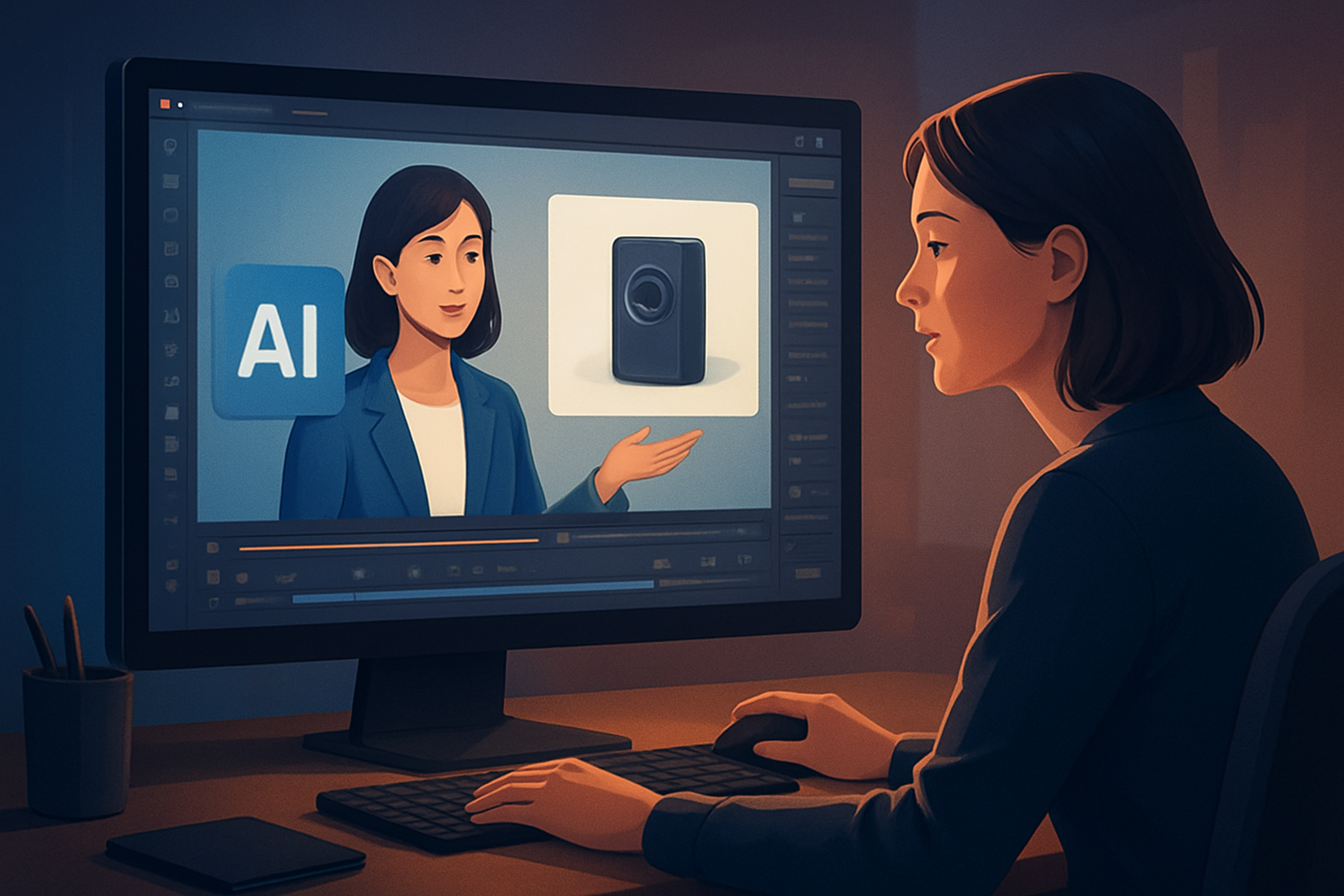
- Avatar-based variants: Avatar mode creates talking-avatar videos from an image plus script or audio — ideal for low-friction spokesperson or UGC-style ads.
- One workspace for finish work: subtitles, title hooks, B-roll, overlays, borders, music, SFX, and volume mix controls live inside the app, reducing tool switching.
- Visual polish without exporting: auto zoom, face tracking, freeze frame effects, grayscale moments, and basic color controls let you finalize look-and-feel quickly.
- Multi-aspect previews and thumbnail generation: preview and export landscape, portrait, and square versions, and store thumbnails alongside videos for quick A/Bing.
- Audio and localization: voice, narration, dubbing, and audio-mix capabilities (including noise cleanup and stylized presets) mean you can create localized variants without hopping tools.
- Persistent project history and reusable assets: projects and generated assets are stored locally so teams can reproduce formats and scale templates across campaigns.
All of the above compresses the production loop — fewer tools, faster drafts, and reusable assets — which is what agencies and in-house teams need to increase throughput.
FAQ
Q: Is this workflow suitable for small teams or solo advertisers? A: Yes. The workflow is designable for a single operator or a small team. Use templates and a local asset library to avoid repeated setup. Shorz’s desktop workspace is optimized to keep projects and assets persistent and reusable.
Q: Can avatars replace on-camera talent? A: Avatars speed production and reduce filming friction for many ad formats, especially UGC-style and spokesperson promos. They don’t replace all production needs; consider avatars as a high-velocity variant tool within a broader creative program.
Q: How do I handle localization and dubbing? A: Create a master asset, then use in-app dubbing or avatar narration to swap languages. Keep on-screen graphics identical and only change voice/subtitles to isolate language effects.
Q: Do I need separate tools for audio and thumbnails? A: Not always. Modern AI editors include noise cleanup, music and SFX generation, audio mixing, and thumbnail generation — enabling end-to-end outputs without bouncing between apps.
Q: What’s the fastest way to get from idea to publish-ready ad? A: Start with a short script, run a text-to-video or Auto Edit draft, apply a title hook and captions, export multi-aspect variants and thumbnails, and upload the batch. Repeat with new hooks.
CTA
Ready to compress your ad-creative loop with avatar and text-driven variants? See a step-by-step example and templates in our Avatar Video Ads guide: Avatar Video Ads and UGC-Style Creative Workflows.