
The core bottleneck agencies hit
Agencies live between client expectations and the clock. The most common choke points are: too many tool handoffs, inconsistent creative systems across projects, and slow first drafts that waste senior time. When every video requires reassembling assets, recreating titles and subtitles, and manual aspect-ratio rework for multiple platforms, throughput stalls and margins shrink.
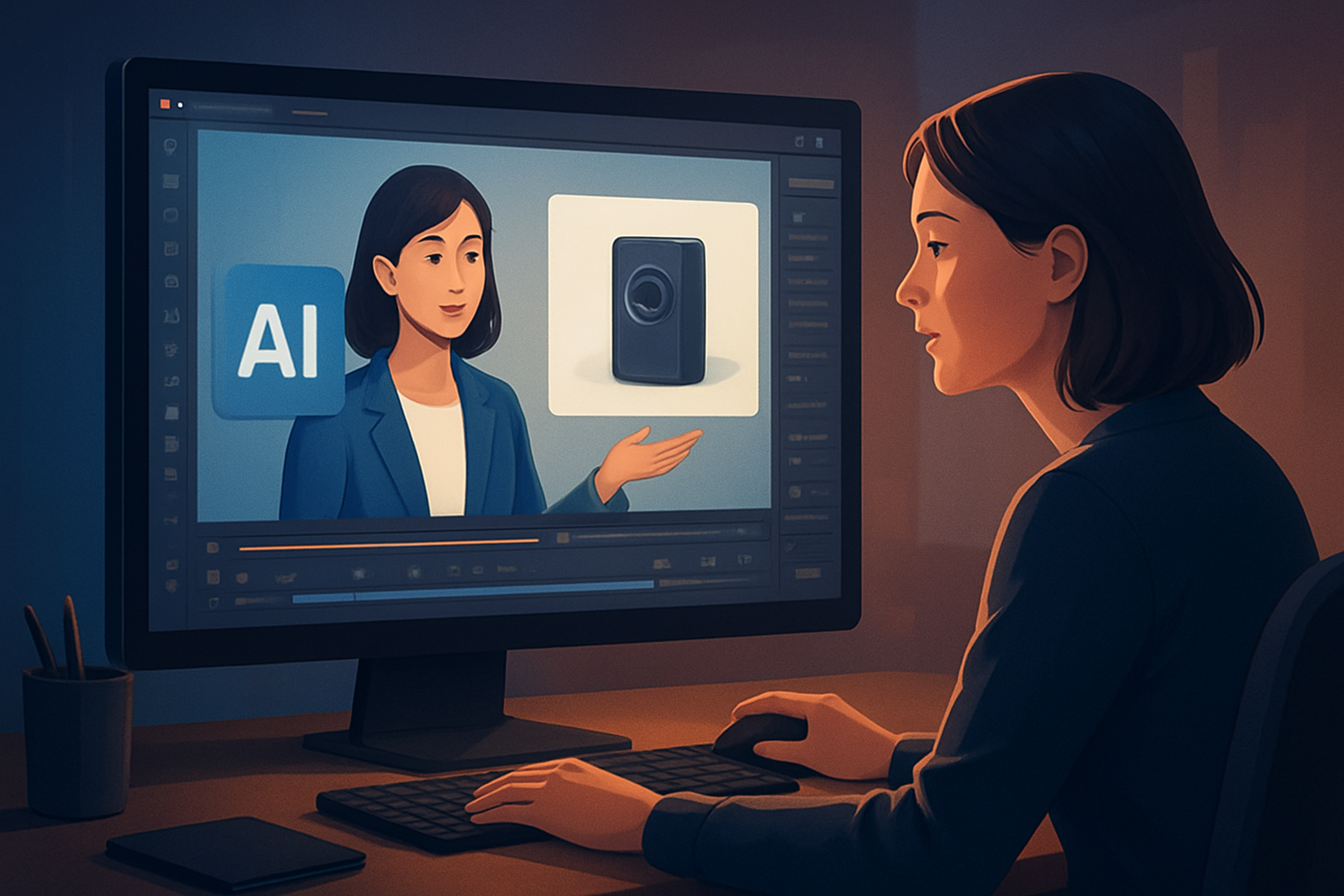
An effective ai video editing workflow for agencies fixes those specific frictions: faster first drafts, repeatable output, reusable assets, and less tool switching — so teams can deliver predictable, publish-ready content instead of raw drafts.
Step-by-step workflow (repeatable, 6 stages)
Intake & brief
- Collect source materials: raw footage, client brand assets (logos, fonts), scripts or talking points, and publishing targets.
- Standardize the brief: runtime, platform (YouTube/TikTok/Reels), key messages, call-to-action, and primary asset ratio.
Ingest & organize
- Import footage, audio, images, and any client URLs into a local project workspace and asset library.
- Tag assets by client, campaign, topic, and usage rights so you can re-use them later.
Draft generation (AI-assisted first pass)
- Use an Auto Edit or Text-to-Video flow to produce the initial cut or scene sequence from footage or scripts.
- Generate subtitles and basic title hooks automatically to create a platform-ready first draft.
Finishing pass
- Apply consistent finishing layers: subtitles style, title hooks, overlays, borders, B-roll, and music.
- Make visual polish adjustments (auto-zoom, face tracking, small color tweaks) and mix audio to match brand standards.
Platform framing & packaging
- Create crops and previews in landscape, portrait, and square. Produce thumbnails and short-form cutdowns simultaneously.
- Run quick quality checks for captions, pacing, and branding across each target format.
Deliver & archive
- Export final deliverables and save generated thumbnails and variants into the project asset library for reuse.
- Archive the project with metadata so future repurposing is fast and predictable.
Tools needed
- Centralized desktop editor with AI-assisted workflows (Shorz is one option): supports Auto Edit Video, Text-to-Video, Avatar, and Podcast project types, local asset storage, and a persistent project workspace.
- Asset manager/DAM or consistent folder structure: for tagging and reusable libraries (Shorz’s My Assets stores video, image, audio, thumbnails, and downloaded GIFs).
- Script/briefing tool: for structured creative briefs and shot lists.
- Stock media & SFX sources: for B-roll and music beds.
- QA checklist and export presets: to standardize deliverables by platform.
- Project tracker (PM tool): to manage approvals and versioning.
Use a single workstation workflow where possible to reduce tool switching and speed up first-pass outputs. For more tactical guides on faster throughput, see AI Video Editor for Faster Production and platform-focused setups like AI Video Editor for YouTubers.
Common mistakes to avoid
- Treating AI drafts as final: AI should compress the time to a usable first draft; always run a finishing pass for brand consistency.
- Not saving generated assets: Thumbnails, hooks, and subtitles are reusable—store them in your asset library.
- Recreating style each time: If titles, overlays, or subtitle styles aren’t templatized, you’ll lose time and consistency.
- Exporting once per platform: Batch exports and multi-ratio previews avoid repeated manual rework.
- Mixing cloud-only and local workflows without parity: for agencies using desktop-first tools, keep projects and assets organized locally to support repeat campaigns.
Optimization tips
- Build templates for common formats: creator-style ad, explainer, and repurposed long-form to short-form templates cut edit time dramatically.
- Standardize subtitle styles and hooks: adopt brand-safe presets to speed final QA.
- Batch ingest by campaign: add footage and URLs in bulk to the asset library so multiple creators can spin variants from the same source material.
- Use preview modes for each platform early: catch framing issues in the draft stage, not at export.
- Maintain a “favorites” list of B-roll and sound effects to avoid repetitive searches.
For vertical-specific examples and faster production methods, consult Best AI Video Editor for Real Estate and AI Video Editor for Faster Production.
How to scale the workflow
- Template proliferation: create a small set of approved templates for all common deliverable types. Each template should include title hooks, subtitle styling, and export presets.
- Asset governance: assign an asset steward to maintain the local library and remove outdated branding or expired media.
- Parallelize tasks: split drafting, finishing, and QA as distinct roles. AI can produce first drafts faster so junior editors can handle early rounds.
- Project history and reuse: rely on persistent project workspaces to clone and adapt prior outputs rather than starting each job from scratch.
- Measure cycle time: track time-to-first-draft and time-to-publish. Reduce steps that don’t change the final creative.
Shorz’s desktop workspace model supports this by storing projects and reusable assets locally, making cloning and repeated patterns fast and predictable.
Where Shorz reduces friction (practical operator notes)
- Consolidated project types: pick Auto Edit Video, Text-to-Video, Avatar, or Podcast flows inside one app to avoid context switching.
- Local persistent workspace: projects and generated assets are stored locally so teams can reuse styles and maintain project history.
- Reusable My Assets library: centralize clips, images, audio, thumbnails, and downloaded media for repeatable outputs.
- AI plus finishing controls: move past raw drafts—Shorz combines AI generation with subtitle, B-roll, overlays, auto-zoom, face tracking, and basic color controls so first drafts are closer to publish-ready.
- Multi-ratio preview and export: produce landscape, portrait, and square variants and thumbnails in the same workspace to reduce re-exports.
- Publishing helpers: built-in YouTube and TikTok helpers and URL-based ingestion speed platform-ready ingestion and early framing checks.
All of these reduce tool sprawl and accelerate first drafts, freeing senior staff to focus on creative direction.
FAQ
Q: Is this workflow suitable for agency teams? A: Yes. The focus is on repeatable templates, local asset libraries, and faster first drafts—exactly the operational needs agencies face. Shorz is a Windows desktop app designed around persistent projects and reusable assets.
Q: Can I reuse assets across clients and campaigns? A: Store and tag assets in the project library so you can reuse thumbnails, overlays, and B-roll across future projects.
Q: Does AI replace the editor? A: No. AI accelerates the first draft and reduces manual assembly. Editors still run the finishing pass to ensure brand fidelity and creative nuance.
Q: Can I publish across platforms from the same project? A: Use multi-ratio previews and export presets to create landscape, portrait, and square variants and thumbnails in the same project workspace.
Q: Where can I try a workflow-optimized editor? A: Learn more about a workflow-focused AI video editor for faster production and operational scaling here: AI Video Editor for Faster Production.
Next step (CTA)
If your agency needs a repeatable, publish-ready ai video editing workflow that compresses tool switching and speeds first drafts, evaluate a Windows desktop solution built for persistent projects and reusable assets. Explore workflow-focused features and examples at AI Video Editor for Faster Production.