Intro — what this guide delivers
If you searched for "creator productivity systems complete guide," you want a practical, end-to-end playbook that makes content creation faster, repeatable, and less fiddly. This guide gives a clear definition, a lightweight workflow you can start using today, platform-specific examples (YouTube, TikTok, Reels), common pitfalls to avoid, tool-selection criteria, and exactly how a Windows desktop AI video editor like Shorz compresses the workflow from source material to publish-ready assets.
Read this as a beginner-to-intermediate system: you’ll get templates, concrete steps, and tool recommendations that reduce busywork while keeping creative control.
Definition: what is a creator productivity system?
A creator productivity system is a repeatable set of processes, assets, and tools that turns ideas and source material into publish-ready content consistently and quickly. It emphasizes:
- repeatable output (templates, presets)
- reusable assets (libraries, thumbnails, audio beds)
- faster first drafts (automated assembly and script-to-video)
- less tool switching (as many steps as possible inside one workspace)
A good system covers planning, production, finishing, packaging, and distribution.
Why this matters right now
- Platforms reward cadence and specificity: short-form channels and algorithmic feeds favor frequent, consistent content.
- Repurposing is necessary: one long recording can become multiple short clips, a thumbnail, and captioned clips for different platforms.
- Tool fragmentation kills momentum: switching between separate apps for editing, subtitle generation, thumbnail design, and format conversions wastes hours.
- Creators need predictable throughput to monetize, retain audiences, and iterate on ideas.
A system that compresses workflow — faster first drafts, reusable libraries, and fewer context switches — directly increases output without burning out the creator.
The core workflow (a practical framework)
Use this five-stage framework. Each stage lists quick actions you can implement today.
Plan (10–30 minutes)
- Define the single goal of the piece (educate, convert, entertain).
- Choose target platforms and dominant ratio (landscape for YouTube, portrait for TikTok/Reels).
- Create a one-paragraph creative brief and a 60–90 second hook you can reuse.
Capture or source (5–60 minutes)
- Record long-form video, voiceover, or upload existing footage.
- Save raw files into a named project folder and tag with keywords (topic, guest, clip ideas).
- Example: record a 12-minute explainer and note 6 timestamps for short clips.
Produce first draft (15–90 minutes)
- Generate a rough cut from script or footage: assemble sections, add narration, auto-subtitles.
- Aim for a publishable first-draft that covers the core message before polishing.
- Tip: start with a short-form first draft for socials, then expand for long-form.
Finish and package (10–60 minutes)
- Apply subtitles, title hooks, intro/outro overlays, thumbnail, and aspect-ratio variants.
- Polish audio levels, add short B-roll, and lock the framing for portrait/landscape/square.
- Create reusable assets (intro clip, music bed, thumbnail template).
Publish & iterate (10–30 minutes)
- Export the relevant ratio/version per platform, upload with platform-specific captions and CTAs.
- Track performance for the headline/hook that worked; feed learnings to the next brief.
For creators repurposing a single long interview into 6 clips: plan hooks first, mark timestamps during capture, use an auto-assembly tool to produce drafts, finalize subtitles and thumbnails for each ratio, then batch-export.
For a script-led explainer: write a 90-second script, use a text-to-video flow to generate visuals and voice, adjust scene timings, then produce portrait and landscape versions.
(If you want tools tuned to speeding up these exact steps, see recommended editors and options below.) AI Video Editor for Faster Production
Common mistakes and how to avoid them
- Over-tool-switching: bouncing between five apps for editing, subtitles, thumbnails, audio, and exporting. Fix: centralize as many steps as possible into one workspace or a tightly integrated set of tools.
- No reusable asset library: re-making the same intro, thumbnail, or music every time. Fix: store templates and assets with clear naming.
- Skipping aspect-ratio planning: producing one landscape file and later re-editing for portrait. Fix: preview and export in all needed ratios from the start.
- Treating automation as final: accepting raw AI outputs as finished. Fix: use AI for fast first drafts, then apply finishing controls (trim, captions, color, B-roll).
- Poor metadata and captions: not optimizing titles, captions, and hooks per platform. Fix: tailor captions and thumbnails to each platform’s best practice.
- Ignoring thumbnails/hooks: thumbnails and first 2–3 seconds decide distribution performance. Fix: create thumbnail variants and lead with dynamic hooks.
Best tools and options — what to choose and why
Choose tools that:
- let you assemble faster first drafts (auto-edit or script-to-video)
- store reusable assets locally or in an organized library
- provide finishing controls (subtitles, B-roll, captions, thumbnails)
- support multi-ratio preview/export (landscape/portrait/square)
Tool categories to consider:
- Auto-assembly editors (speed up first drafts from footage or script)
- Text-to-video suites (generate visuals from scripts with style references)
- Asset managers and thumbnail generators (store and reuse visual assets)
- Audio editors or in-app volume-mix features (clean narration and music)
- Scheduling/publishing helpers for platform-specific uploads
For a curated list of tool features and comparisons tailored to creators, see the tools primer. Best Tools for Creator Productivity
Best use cases by audience (concrete examples)
Solo YouTube educator
- Workflow: script → long-form shoot → pull 6 shorts → thumbnails per short → schedule uploads.
- Win: consistent visual style and thumbnails saved in a single project for reuse.
Short-form social creator (TikTok/Reels/Shorts)
- Workflow: record vertical-first footage, auto-edit into 15–60s cuts, add animated hooks and captions, export portrait.
- Win: portrait preview/export and caption templates reduce publish time.
Podcaster repurposing to video
- Workflow: import audio → auto-generate waveform visual + key-quote clips → create video shorts with captions and thumbnails.
- Win: batch generation of clips and reusable audio beds.
Faceless educational channel
- Workflow: text-to-video from scripts, style reference images for consistent look, avatar or narration, subtitles, thumbnails.
- Win: repeatable visual identity and faster course content production.
Small agency or social manager
- Workflow: central asset library per client, rapid first-draft edits across multiple aspect ratios, thumbnail variants.
- Win: faster turnaround and consistent brand packaging.
For tool-specific workflow examples tailored to video-first creators, see the editor-focused guide. AI Video Editor for Faster Production
How Shorz fits into this workflow
Shorz is a Windows desktop AI video production suite designed around workflow compression for creator-style, short-form, ad, explainer, repurposing, and faceless workflows. Here’s how Shorz maps to the framework above:
Plan & source
- Shorz supports URL-based ingestion into a local asset library so you can collect source clips and references into one persistent project.
Produce first drafts
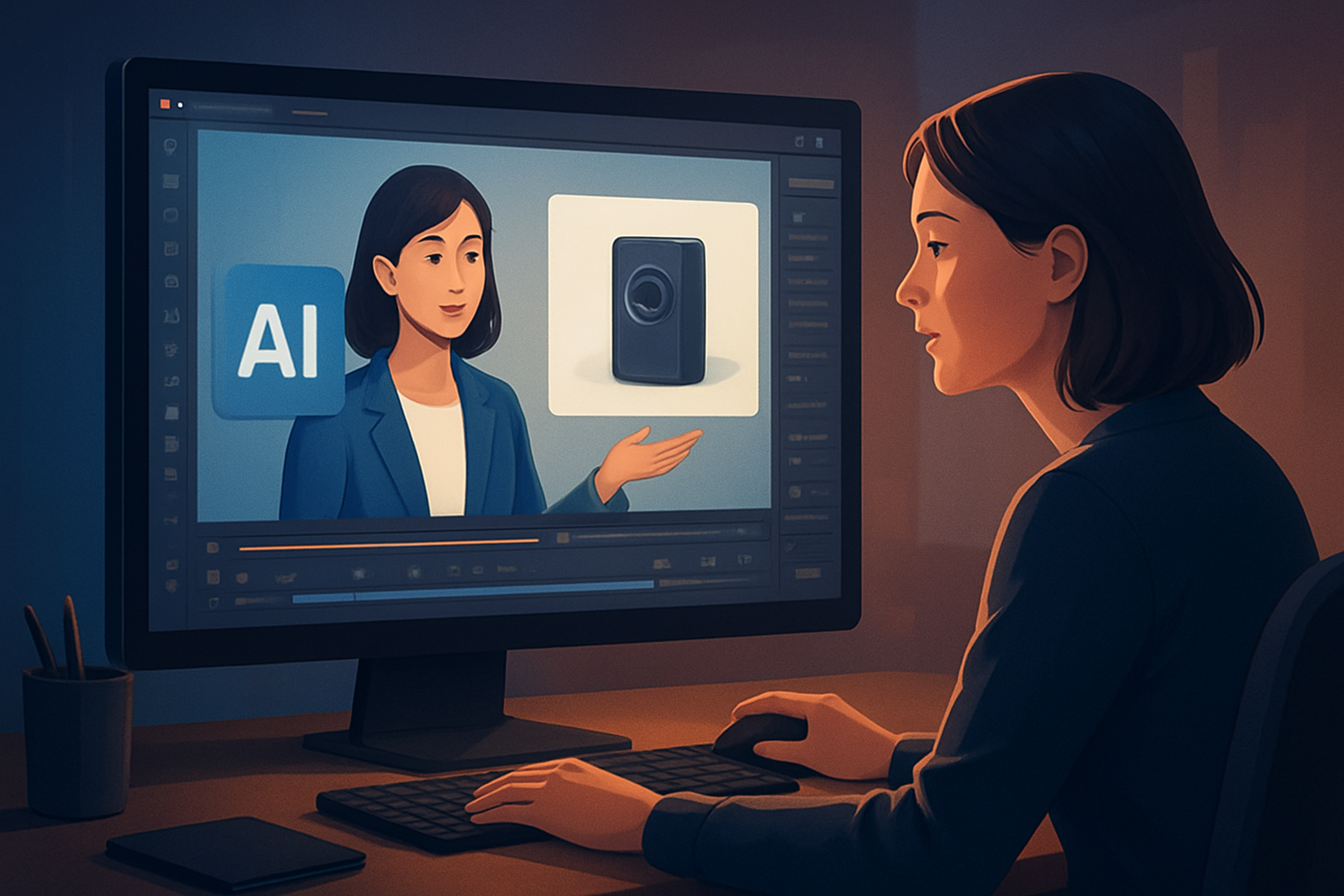
- Four core project types let you begin from footage, scripts, avatar images + audio, or dialogue-based formats: Auto Edit Video, Text-to-Video, Avatar, and Podcast. This speeds up first drafts whether you start with a script or recorded footage.
Finish & package
- The app combines AI generation with finishing controls: subtitles, title hooks, B-roll, overlays, borders, music, SFX, and volume mix controls. Visual polish layers include auto zoom, face tracking, freeze frames, grayscale moments, and basic color controls to make drafts publish-ready.
- You can preview and export landscape, portrait, and square variants so the same project fits YouTube, TikTok, and Reels without separate re-edits.
Reusable assets & persistence
- Shorz stores projects and generated assets locally, enabling reusable libraries, thumbnails, and persistent project history so the next episode or clip starts from an organized foundation.
Publishing-adjacent packaging
- Thumbnail generation and creator-style packaging layers (subtitle design, overlays, GIFs, emojis, web images, and B-roll) keep the workflow focused on publish-ready outputs, not just raw drafts.
- There are YouTube and TikTok helpers built into the product to reduce manual configuration when you export for specific platforms.
In short: Shorz compresses the system by delivering faster first drafts, repeatable outputs, a persistent asset library, and less tool switching inside a single Windows desktop workspace. If you're aiming to go from idea to multiple publish-ready versions faster, Shorz is designed for exactly that use case. AI Video Editor for Faster Production
FAQ
Q: What should a creator track to measure productivity?
- Track cycle time per piece (idea → published), number of publishable outputs per recording, and time spent in manual tasks (captioning, thumbnail creation). Aim to reduce manual tasks via templates and automation.
Q: Can I reuse assets across projects?
- Yes. Store intros, thumbnails, music beds, and overlays in an organized asset library and call them into new projects to maintain visual consistency.
Q: Do I have to accept automated edits as the final product?
- No. Use automation for the first draft and then apply finishing controls (trim, overlays, mix) to reach publish quality.
Q: Is it better to create for portrait or landscape first?
- It depends on primary goals: portrait first for short-form traction, landscape first for long-form discovery. If you need both, preview/export support for all ratios is essential to avoid re-editing.
Q: Where can I learn tool-specific workflows for speeding production?
- See in-depth editor workflows and feature lists for faster production inside the editor guide. Best Tools for Creator Productivity AI Video Editor for Faster Production
Quick CTA
Ready to compress your video workflow and produce faster first drafts with reusable assets and one local workspace? Explore Shorz for creators on Windows and see how the Auto Edit Video, Text-to-Video, Avatar, and Podcast flows speed production. AI Video Editor for Faster Production