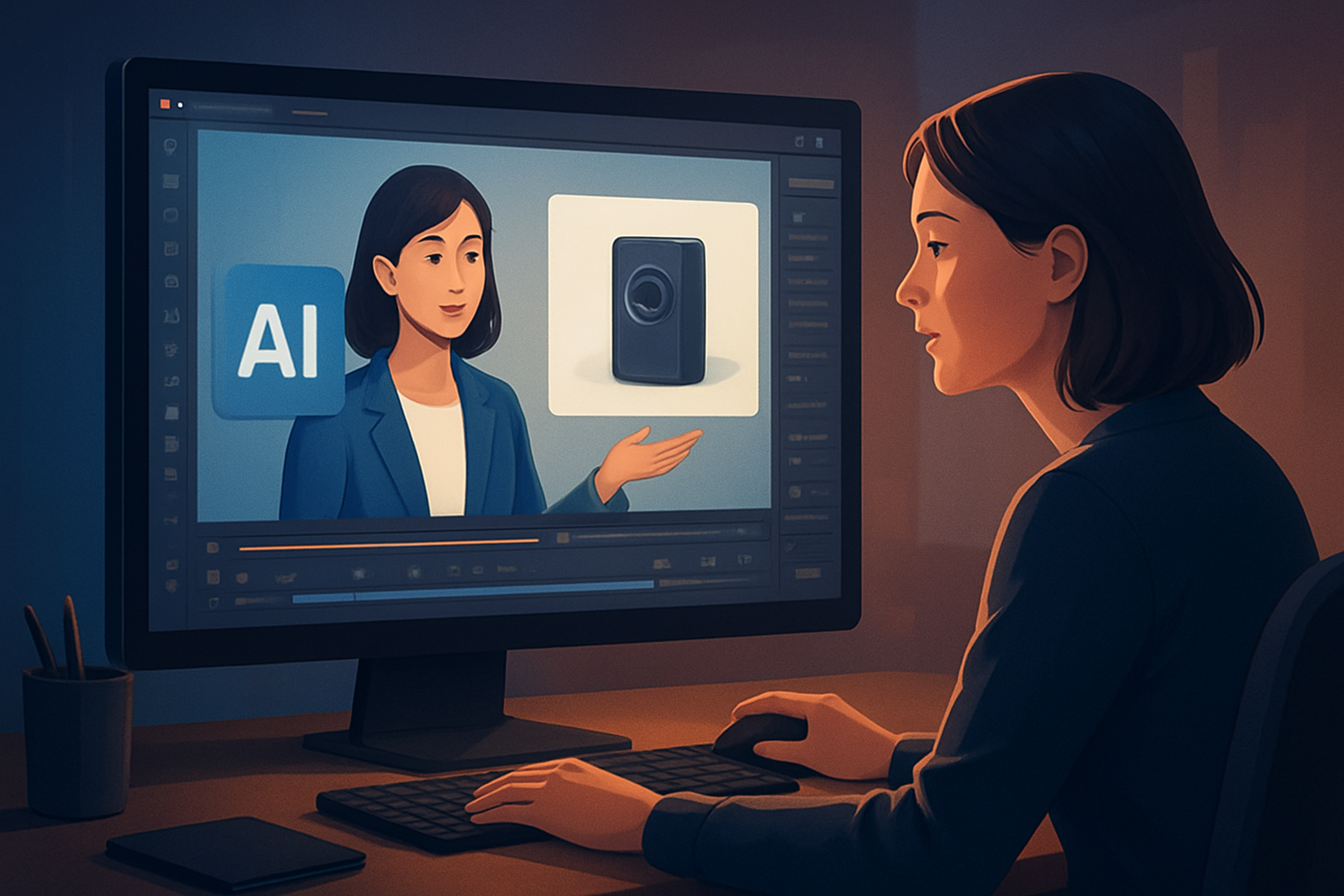


The core bottleneck: scripts stagnate before publish
Faceless channels live or die on a repeatable script-to-video engine. The common choke points are not writing ideas — they’re translating a script into a consistent, platform-ready video: narration that sounds natural, visuals that match tone, subtitles and hooks that convert, and thumbnails that actually get clicks. Teams waste time switching between tools for TTS, graphics, editing, captions, and exports. The result: slow cycles, inconsistent brand identity, and missed distribution windows.
This article gives a tight, step-by-step workflow for faceless creators who need reliable throughput and consistent output.
Step-by-step script-to-video workflow for faceless channels
- Script and segmentation
- Break the script into an opening hook (3–7 seconds), core points (30–90 seconds for shorts), and a CTA/close.
- Add scene markers: “Visual A,” “B-roll B,” “Show bullet list,” or “Freeze frame.”
- Choose format and aspect ratio
- Decide target platforms up front (YouTube long/short, TikTok, Reels).
- Pick ratios early so visuals and titles fit without rework.
- Collect or generate assets
- Gather brand assets: logo, style reference images, music stems, reusable overlays.
- If you need generated visuals, prepare 1–3 style reference images to stabilize output.
- Produce narration
- Use a TTS or recorded voice. Upload recorded audio or select a voice and preview narration.
- Match narration length to scene segmentation.
- Assemble scenes in a single workspace
- Import script, narration, and assets into one project. Apply style references to each scene.
- Add generated B-roll or images where needed; set motion and transition presets.
- Add finishing layers
- Create title hooks, subtitles, overlays, and sound mix.
- Apply visual polish: auto zoom on key visuals, freeze frames for emphasis, and basic color tweaks.
- Preview in all target outputs
- Check landscape, portrait, and square previews. Adjust captions and title placement.
- Export and package social assets
- Generate the final video plus thumbnails and any short clips or GIFs for other platforms.
- Store everything in a reusable asset library for future videos.
Tools you need (and where Shorz fits)
- Script editor (Google Docs, Word, or any markdown editor)
- TTS or audio recorder (for narration upload)
- Image/video generator or stock library (when you need visuals)
- Video editor that handles subtitles, hooks, and multi-ratio previews
- Thumbnail generator and packaging tools
Shorz covers many of the last three points inside one Windows desktop app. It supports:
- Text-to-Video from scripts with voice selection and narration preview.
- Imported assets plus generated images or video, guided by style reference images.
- A persistent local asset library for reusable media and thumbnails.
- Shared finishing controls: subtitles, title hooks, overlays, B-roll, music, sound effects, and export previews for landscape/portrait/square.
- Thumbnail generation and platform helpers for YouTube and TikTok.
For comparisons and deeper tool choices, see Best Script to Video Tool for YouTubers. To explore a workflow inside Shorz, see Script to Video Workflow With Shorz.
Common mistakes to avoid
- Skipping style references: inconsistent visuals across episodes = weaker brand recognition.
- One-size captions: captions that cover key visuals or get cut off in portrait mode.
- Treating AI output as final: the raw first draft needs human finishing — pacing, emphasis, and hook timing.
- Not saving templates or assets: wasting time rebuilding overlays and thumbnails every video.
- Ignoring platform previews: a title that looks good in landscape may overlap with UI elements in Shorts.
Optimization tips (practical, operator-focused)
- Write the hook as an independent scene, test its first 3 seconds in isolation.
- Use style reference images to lock visual identity across generated scenes.
- Batch narration and batch visual generation: do voices for 5–10 scripts in one session.
- Save overlay and subtitle presets as templates to apply in a single pass.
- Preview in all three ratios before export; tweak subtitle sizes and title placement per ratio.
- Reuse thumbnails as A/B test variants: keep one winning template and iterate.
How to scale this workflow
- Build a template library: hooks, subtitle sets, intro/outro overlays, music beds.
- Standardize naming and project folders in your local workspace so editors can pick up any project.
- Batch produce scripts and record narration sessions—then batch-generate visuals and assemble.
- Turn repeatable steps into SOPs: script segmentation rules, style reference selection, export settings.
- Use persistent project history and asset libraries to avoid recreating motion presets or thumbnails.
Shorz supports scaling by keeping projects and assets local and persistent, making templates and cached media available across videos without bouncing between tools. That reduces friction when ramping from one video per week to many per day.
Where Shorz reduces friction in this system
- Less tool switching: script → narration → visuals → finishing in one local workspace.
- Faster first drafts: Text-to-Video can turn typed scripts and selected voices into an early cut quickly.
- Repeatable output: stored assets, thumbnails, and project templates make subsequent videos faster.
- Finishing controls built-in: subtitles, title hooks, overlays, B-roll, and audio mix reduce handoffs.
- Multi-ratio preview and export: catch layout issues before you export multiple versions.
- Persistent local storage: project history and My Assets let agencies and creators reuse styles without rebuilding.
For a hands-on example of compressing the end-to-end process inside one tool, check Script to Video Workflow With Shorz.
FAQ
Q: How fast can I get from script to publish-ready video? A: Depends on complexity. With templates and assets prepped you can produce a short-form faceless video in a few hours; first drafts are much faster when you use Text-to-Video and voice previews.
Q: Can I use my recorded voice? A: Yes — upload speech audio for narration, or use voice selection and preview options when using generated narration.
Q: Will AI outputs look consistent across episodes? A: Use style reference images and saved templates to stabilize visual identity. Consistency comes from reusing the same references, overlays, and subtitle presets.
Q: Do I need cloud storage? A: No — Shorz stores projects and assets locally on Windows, which supports quick reuse and a persistent project history.
Q: Can I produce thumbnails and multi-format exports in the same workflow? A: Yes — Shorz generates and stores thumbnails alongside videos and supports landscape/portrait/square previews and exports.
Q: Is this suitable for agencies? A: Yes — persistent local projects and My Assets libraries support repeatable client work and faster delivery without excessive tool sprawl. For more tool options, see Best Script to Video Tool for YouTubers.
Final CTA
If you want a workflow that turns scripts into publish-ready faceless videos with fewer tools and faster first drafts, start mapping your SOPs into a single persistent workspace. Learn how to run a repeatable script-to-video process in Shorz: Script to Video Workflow With Shorz.