
The core bottleneck in cold prospecting video ads
The single biggest bottleneck for advertisers running cold outreach campaigns is not creative ideas — it’s throughput and relevance. You need dozens of short, personalized ad variants (different hooks, personas, languages, and aspect ratios) to break through to cold audiences. Film time, tool switching, and repetitive finishing work slow teams down, so winning ideas die before you can test them widely.
This guide gives a step-by-step, production-focused workflow that turns target data into repeatable, A/B-ready video ads. It assumes you want fast first drafts, repeatable output, and fewer tools in the chain.
Step-by-step workflow: from target to test-ready ads
Define target + one-line value prop
- Pick a narrow persona (industry, job title, pain point).
- Write one-line value prop aimed at that persona. This guides hooks and CTAs.
Brainstorm 5–10 hooks per persona
- Keep hooks swipeable: problem, curiosity, social proof, benefit, or objection.
- Prioritize hooks that promise immediate value or relevance in 3 seconds.
Choose format: avatar, footage, or faceless
- Avatar (talking-image) for scalable spokesperson-style outreach.
- Short footage or repurposed clips for performance creatives.
- Faceless, text-driven for compliance-sensitive or low-budget tests.
Draft micro-scripts (10–20 seconds)
- Hook (0–3s), quick value or proof (3–12s), single CTA (12–20s).
- Write variants that swap the hook and the CTA tone (book demo, calendar link, download).
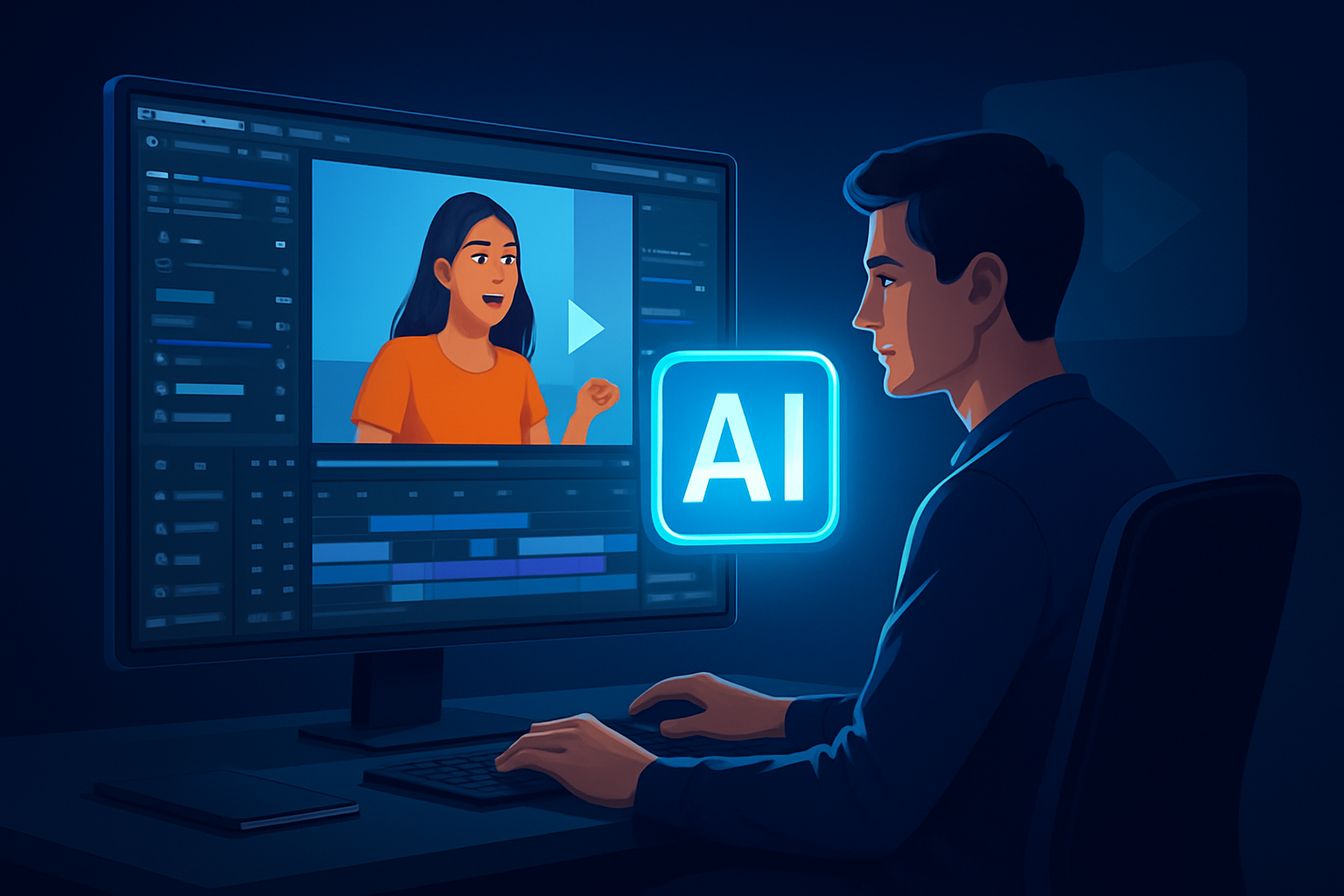
Produce first drafts inside your editor (use Shorz as the production hub)
- Create a new project and import any footage, images, or audio into My Assets.
- For avatar ads, load an avatar image and paste script or upload recorded audio; generate the talking-avatar clip.
- For footage, use Auto Edit Video to assemble punchy clips and add title hooks.
- Apply quick finishing: subtitles, title hooks, music, and auto-zoom or face tracking to tighten visuals.
Generate variants and localize
- Export three aspect ratios (landscape, portrait, square) to match placement demands.
- Create 3–5 script variants per persona and batch-produce inside the same project using saved assets.
- For international markets, generate dubbed or localized audio versions and reuse the same video cuts where possible.
Final QA and assets for ad platforms
- Produce thumbnails and include subtitle files.
- Name assets with persona_hook_aspect_language to simplify campaign assembly.
- Export mastered files and upload to your ad platform with UTM-tagged links.
Test, learn, iterate
- Launch A/B tests with 3–5 hooks and one control creative.
- Use learnings to update your script templates and re-run batch production.
Tools needed
- Shorz (Windows desktop AI video production suite): import footage, create avatar videos from image+script/audio, store reusable assets, generate subtitles, audio/dubbing, preview multiple aspect ratios, and finish with titles/music/sfx.
- CRM or prospecting database: owner-level targeting and personalization inputs.
- Ad platform and tracking: Facebook/Meta, LinkedIn, or DSP plus UTM/event tracking.
- Analytics dashboard: consolidate CTR, completion, and conversion signals.
- Script editor or prompts document: fast iteration on hooks and CTAs.
- Optional lightweight copy tools for subject lines and thumbnails.
Shorz compresses the production loop (faster first drafts, less switching between tools, reusable assets), while other tools handle audience targeting and campaign metrics.
Common mistakes to avoid
- Testing one creative across all personas: personalization matters in cold outreach.
- Ignoring the first 3 seconds: most cold viewers decide inside the hook.
- Skipping subtitles and aspect variants: many platforms autoplay muted and favor portrait.
- Overproducing one winner before testing: validate hooks before polishing.
- Losing asset hygiene: not storing or standardizing asset names makes scaling chaotic.
Optimization tips (quick wins)
- Start with the hook, not the product benefit. Hooks get impressions; benefits get clicks.
- Keep CTAs context-specific: “Book a 10-minute call” vs “Learn more” perform differently by persona.
- Use thumbnails that echo the video’s hook and mention a tangible outcome.
- Test one structural change at a time (hook vs CTA vs length) to know what moves metrics.
- Use Shorz’s multiple aspect previews to tune cropping and face framing before exporting.
- Balance music and narration in Shorz using source-volume controls to keep voice intelligible on mobile.
How to scale this workflow
- Build template projects in Shorz with pre-set subtitles, title hooks, and audio presets. Reuse these templates for new personas to compress first-pass production.
- Populate My Assets with persona-specific overlays, logos, and thumbnail templates so new projects inherit brand consistency.
- Batch-produce variants: swap script lines and render multiple aspect ratios in sequence rather than starting from zero.
- Standardize naming and export folders to let ops automate campaign uploads.
- For global scaling, replicate the project, swap audio/dubbing, and reuse visuals—no reshoot needed.
See more on scaling and high-volume testing patterns in related workflows: Video Ad Generator Workflow for High-Volume Testing, Video Ad Generator Workflow for Budget Scaling, Video Ad Generator Workflow for Creative Iteration.
Where Shorz reduces friction in the cold-ad workflow
- Faster first drafts: generate avatar or edit footage without switching apps so you can test hooks quickly.
- Reusable assets: My Assets keeps thumbnails, overlays, audio, and generated clips locally for repeat campaigns.
- Less tool switching: subtitles, dubbing, music, sound effects, and volume mix live in the same workspace.
- Aspect previews: preview and export landscape, portrait, and square versions without re-editing.
- Finishing controls: auto zoom, face tracking, and title hooks compress polish steps that normally cost time.
- Persistent projects: local project history and cached assets speed up repeat variants for the same persona.
FAQ
Q: Can I use a single avatar for many personas? A: Yes. Shorz’s Avatar mode creates talking-avatar videos from an image plus script or audio, letting you reuse the same avatar across persona-specific scripts. Don’t rely on avatars for every use case—treat them as a fast substitute for filmed spokespeople.
Q: How do I handle localization? A: Shorz supports dubbing, narration, and audio mixing inside the app, so you can create localized audio tracks and reuse the same visuals where appropriate.
Q: Will this workflow replace production entirely? A: No. The workflow compresses ad-creative and spokesperson production by reducing filming friction and reusing assets—but high-end campaigns may still need bespoke shoots.
Q: Where are projects stored? A: Projects and generated assets are stored locally on your workstation, which supports repeat work, reusable libraries, and persistent project history.
Q: Can I preview multiple aspect ratios before export? A: Yes. Use the app’s previews to optimize framing for portrait, square, and landscape placements without rebuilding cuts.
CTA
Ready to cut filming friction for cold prospecting and produce more testable ad variants? Explore avatar-driven ad workflows and how to batch-produce spokesperson-style creatives: Avatar Video Ads and UGC-Style Creative Workflows.