

For course creators who make video on YouTube — get more assets from one recording
You recorded a 60–90 minute lesson for your course. YouTube is your primary platform. Now you need trailers, module clips, Shorts, chaptered highlights, and thumbnails — fast. That’s the daily reality for course creators who also function as video creators on YouTube: long-form source material, platform-specific formats, and a small production window to maintain relevance and SEO.
This page shows a repeatable, week-ready repurposing workflow that turns one course recording into dozens of publishable assets with less tool switching and reliable visual consistency.
Why course creators on YouTube need this workflow now
- YouTube rewards frequent, platform-native assets (shorts, clips, fresh thumbnails) that feed discovery and retention.
- Course recordings are dense with evergreen teaching moments that can be reused as Shorts, explainer clips, ads, and module intros — but most creators don’t have time to manually edit each format.
- Platform friction: YouTube requires accurate captions, multiple aspect ratios, and attention-grabbing hooks to perform. Doing that across many clips multiplies editing time.
- Repurposing closes the gap between content inventory (your recorded lessons) and the output YouTube’s algorithm and students demand.
You don’t need new recordings — you need a compressed workflow that produces consistent, publish-ready variations from existing footage.
A practical repurposing workflow you can run this week
Day 1 — Audit + import
- Pick one recorded lesson and mark 6–10 teachable moments (30–90s each).
- Import the full recording and any slides, images, or previous assets into a local project library.
Day 2 — Auto-edit first drafts
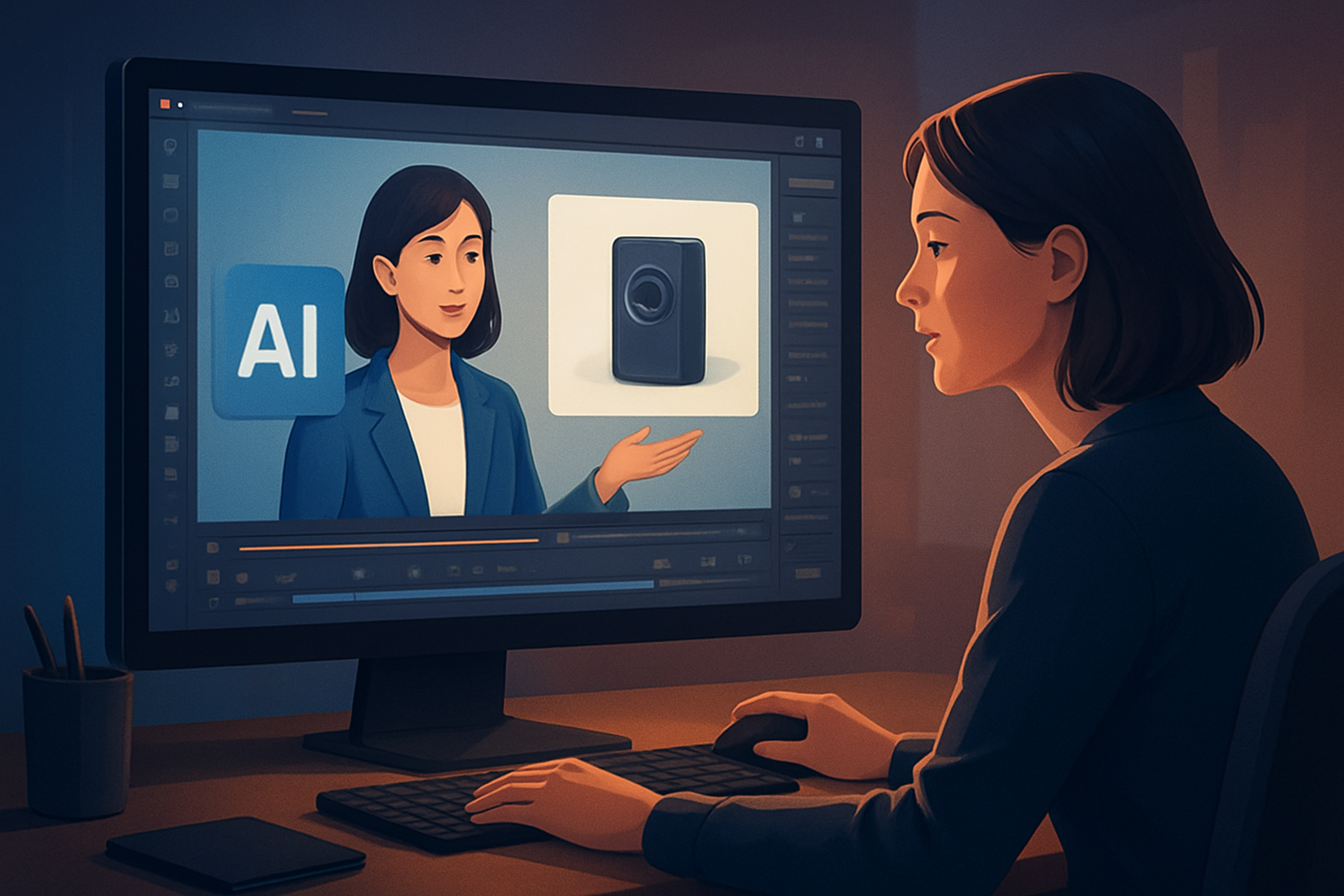
- Use a footage-first Auto Edit Video workflow to transcribe and analyze the recording.
- Let the editor generate candidate short edits around your marked moments; review a first-draft sequence instead of cutting from scratch.
Day 3 — Add finishing layers
- Apply subtitles, title hooks, and basic visual polish (auto zoom, face tracking, freeze frames) to each clip.
- Swap in B-roll or slide screenshots for sections that need clearer visuals.
Day 4 — Format and thumbnail
- Preview and adjust outputs in landscape (16:9), portrait (9:16), and square (1:1) ratios.
- Generate and save thumbnails and reuse them across outputs.
Day 5 — Export and schedule
- Export publish-ready files with burned captions or sidecar SRTs.
- Queue clips into your YouTube upload schedule and reuse assets for email and course landing pages.
Repeat: store all generated assets locally so your next repurposing pass reuses thumbnails, music tracks, and style references for consistent branding.
Why this works in a week: the footage-first Auto Edit sequence gets you faster first drafts, while built-in finishing controls prevent draft stalls that normally push editors into other tools.
Best-tool criteria for course-to-YouTube repurposing (and how Shorz matches)
Choose tools that match these practical needs:
- Local, reusable asset library for repeat projects and consistent branding.
- Shorz stores projects and generated assets locally, supporting reusable libraries and persistent project history.
- Footage-first repurposing with automated transcription and edit suggestions.
- Shorz’s Auto Edit Video imports footage, transcribes/analyzes it, generates editing instructions, and builds edit sequences.
- AI generation plus finishing controls (not raw first drafts).
- Shorz combines AI generation with subtitle, title hook, B-roll, overlays, and volume mix controls so drafts move toward publish-ready inside the same workspace.
- Multi-aspect previews and thumbnail generation for YouTube and Shorts.
- Shorz previews in landscape, portrait, and square, and can generate and store thumbnails alongside video outputs.
- Ability to pull existing uploads for repurposing.
- Shorz supports downloading source material from YouTube or TikTok URLs into the local asset library to increase output from existing inventory.
If your checklist includes repeatability, fewer apps, and faster publish cycles, Shorz fits that brief as a Windows desktop AI video production suite built for creator-style and educational workflows.
Where Shorz fits in your stack and daily workflow
- Pre-production: spreadsheet of timestamps (your notes) → import footage into Shorz.
- Editing: use Auto Edit Video to create short-form edits; use Text-to-Video or Avatar flows for faceless explainers or scripted intros.
- Finishing: apply subtitles, title hooks, B-roll, auto zoom, and color tweaks inside the same project.
- Output: export ratio-specific files and thumbnails, then upload to YouTube Studio for scheduling and analytics.
- Reuse: assets and project history stay local so you can rerun templates, reuse thumbnails, and generate consistent edits without rebuilding settings.
Recommended pairings: content calendar + Shorz as the single editor for repurposing, then YouTube Studio or your LMS for publishing and student-facing delivery. Shorz compresses the middle phase — draft to finished output — reducing context switching between transcription, editing, captioning, and thumbnail tools.
For course creators doing podcasts or audio-first lessons, see how similar repurposing patterns apply: Video Repurposing for Podcasts. For agencies and teams helping educators scale assets, there are agency-specific strategies here: Video Repurposing for Agencies. If you’re experimenting beyond courses — startups or SaaS use similar repurposing principles — compare approaches at Video Repurposing for SaaS Founders.
FAQ — focused on course creators publishing to YouTube
Q: Can I turn a single 60–90 minute lecture into multiple clips quickly? A: Yes. Use the Auto Edit Video workflow to transcribe and generate candidate cuts around key moments, then apply subtitles and hooks inside the same project to produce publish-ready clips.
Q: Will I need separate tools for subtitles, thumbnails, and different aspect ratios? A: Shorz includes subtitles, thumbnail generation, and multi-aspect previews (landscape, portrait, square) so you can finish those elements without switching apps.
Q: Can Shorz use material already uploaded to YouTube? A: Yes. Shorz supports downloading source material from YouTube or TikTok URLs into the local asset library to repurpose existing uploads.
Q: I run faceless tutorials and scripted explainers. Does Shorz help? A: Use Text-to-Video and Avatar project types to build script-led or faceless content from typed scripts, narration audio, and style reference images — then apply the same finishing layers and thumbnails for consistency.
Q: Where are my files stored and reused? A: Projects and generated assets are stored locally in Shorz, enabling persistent project history and reusable libraries that speed repeat work.
Q: I don’t have a week every week — can this be scaled? A: The goal is workflow compression: faster first drafts, repeatable output templates, and reusable assets mean subsequent repurposing passes take progressively less time.
Ready to turn one recording into more assets?
Compress the repurposing loop — from recording to Shorts, clips, thumbnails, and faceless explainers — inside one Windows desktop workflow built for creators. Start structuring your next repurpose pass and see how repeatable outputs reduce overhead.
Get started: Video Repurposing Workflow for More Output