
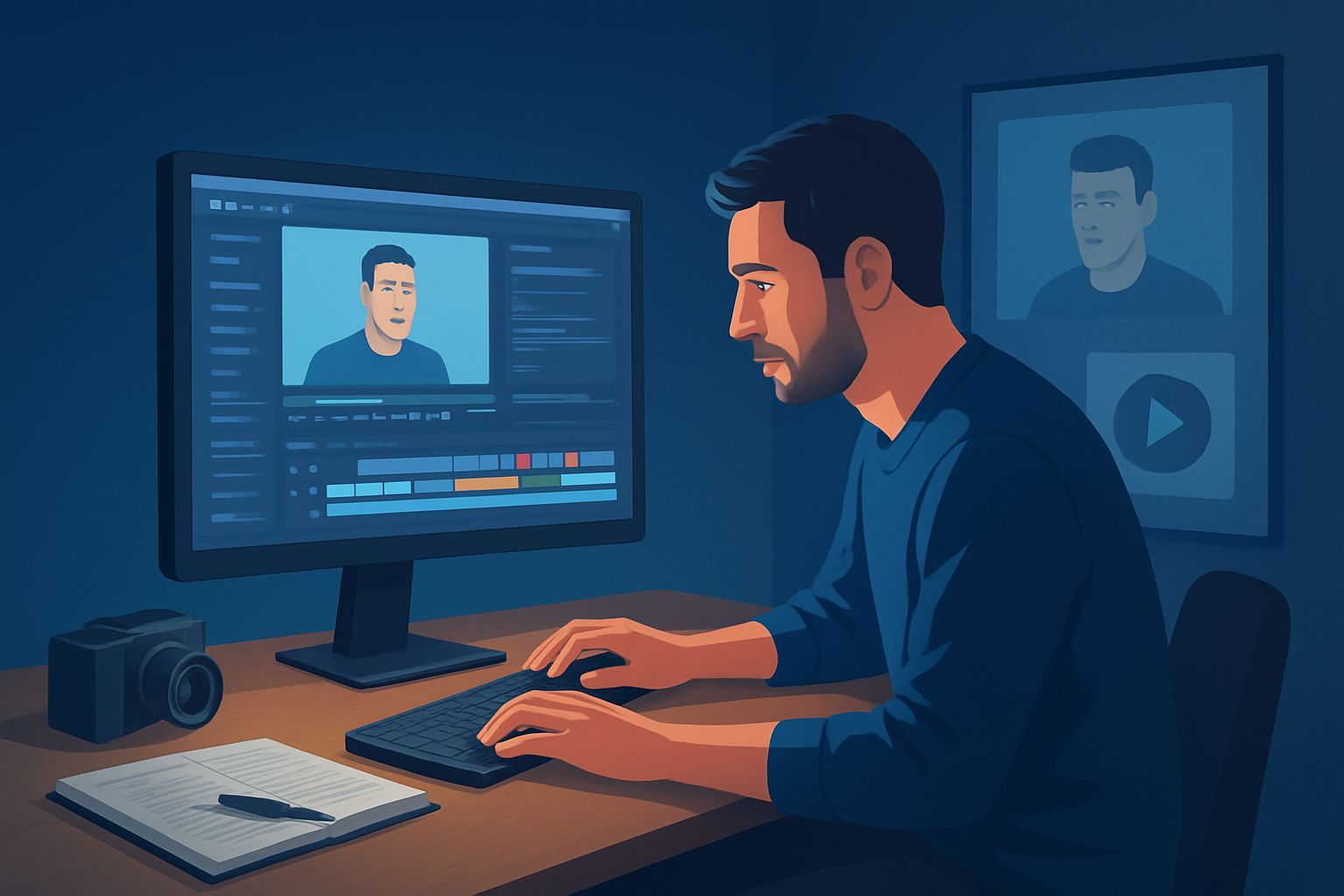
The real bottleneck for solo creators
You have more source material than you can publish: long interviews, livestreams, podcast episodes, tutorials. The bottleneck isn’t ideas — it’s the grind of turning those long files into platform-ready clips: finding moments, trimming, captions, adding hooks, reformatting for vertical, and reusing thumbnails and assets. Tool switching and repetitive manual steps kill momentum. You need a repeatable, low-friction repurposing workflow that produces consistent first drafts and keeps finishing time predictable.
Step-by-step video repurposing workflow for solo creators
Inventory and pick targets
- Scan recent long-form recordings and pick 6–12 high-value moments (stories, tips, demo steps).
- Prioritize moments that contain a single, shareable idea and a natural hook.
Batch ingest source files
- Pull originals into one local folder or workspace. If the source lives on social platforms, download the source URLs into your local library where possible.
- Keep filenames consistent so you can find source clips later.
Auto-transcribe and mark timestamps
- Run a transcription pass to surface keywords and easy timestamps for highlights.
- Use the transcript to search for hooks, questions, and quotable lines.
Create draft cuts (batch)
- For each highlight, build a draft edit: trim to the idea, tighten pauses, and set an intro hook.
- Use an AI-assisted first-draft process to create many drafts quickly, then batch-refine the best ones.
Add finishing layers
- Apply subtitles, title hooks, and quick B-roll where needed.
- Apply visual polish: auto-zoom, face tracking, freeze frames for emphasis, and basic color tweaks.
Format and preview for platforms
- Export at the needed aspect ratios (landscape, square, portrait) and preview each output to confirm framing and legibility.
- Generate and store thumbnails alongside exports.
Schedule and publish
- Pair each clip with a caption and CTA, schedule uploads, and reuse the same core asset across multiple platforms with minor adjustments.
Store and reuse
- Save project presets, overlays, and thumbnails in a local asset library for re-use on future repurposing batches.
Tools you need (and where Shorz fits)
- Recording and storage
- Good mic, camera, and a simple file organization system on local storage or external drives.
- A main editor that compresses the workflow
- Shorz (Windows desktop): supports footage-first Auto Edit Video, transcription-driven editing, subtitles, title hooks, B-roll, aspect-ratio previews (landscape/portrait/square), and local asset storage.
- Use Shorz to keep projects and generated assets locally for repeatable output and quicker first drafts.
- Scheduling and publishing
- A social scheduler or platform-native uploader to queue posts.
- Lightweight audio tools
- For noise reduction or quick EQ when needed.
- Optional thumbnail/design tools
- Shorz can generate and store thumbnails, but you might supplement with a dedicated image editor if you need pixel-perfect covers.
For more workflow examples tailored to different team sizes, see Video Repurposing Workflow for In-House Teams, Video Repurposing Workflow for Agencies With Shorz, and Video Repurposing Workflow for Podcasts With Shorz.
Common mistakes to avoid
- Skipping transcription: Without a searchable transcript you’ll hunt clips manually and miss high-value soundbites.
- Treating one cut as good for every platform: Square and vertical need different framing and hooks.
- Over-editing first drafts: Aim for fast, usable drafts; heavy polishing should be reserved for top-performing clips.
- Losing assets: Don’t export and discard project files. Keep templates, thumbnails, and overlays in a reusable library.
- Ignoring audio mix: Loudness and background music levels make or break short-form performance.
Optimization tips that actually work
- Start with the hook: Lead with the strongest line within the first 3 seconds.
- Create a repeatable title-hook template: Same placement, consistent typography, and a short action phrase.
- Batch similar tasks: Transcribe all files at once, then batch-generate draft edits.
- Use platform-aware captions: Shorten or break long lines for mobile reading.
- Leverage previews in all ratios before you export to avoid rework.
- Track what works and store those formats as project templates for faster future runs.
For a complete method and examples, consult Video Repurposing: Complete Guide.
How to scale this workflow as a solo creator
- Template everything: Create a few “skins” (overlays, music, caption styles) so each batch starts from a template.
- Build a reusable asset library: Store intros, outros, logos, thumbnails, and B-roll locally and reference them across projects.
- Batch source-to-first-draft: Use AI-assisted first-draft generation for many clips, then prioritize human finishing for the top performers.
- Outsource finishing work selectively: Pass standardized projects and style guides to a freelancer when you need extra throughput—because your assets and project history are persistent, handoffs are cleaner.
- Automate downloads: Where allowed, pull platform source URLs into your workspace so you can repurpose existing posts quickly.
Where Shorz reduces friction
- Faster first drafts: Use the Auto Edit Video workflow to move from raw footage to draft edits without jumping across apps.
- One persistent workspace: Projects, generated thumbnails, and assets live locally so you can reuse them without re-importing.
- Footage-first repurposing: Transcribe, analyze, generate edit instructions, and build sequences inside the same app—this minimizes tool switching.
- Platform-ready previews: Preview in landscape, portrait, and square so you don’t export, realize the crop is off, and start over.
- Reusable My Assets system: Store video clips, thumbnails, downloaded GIFs, and audio assets for future batches.
- Built-in finishing controls: Subtitles, title hooks, B-roll, overlays, zoom and face tracking, freeze-frame effects, and basic color controls let you treat AI generation as the start of a finished edit, not just a rough draft.
FAQ
Q: Do I need to be a video editor to repurpose effectively? A: No. With a repeatable system and tools that generate useful first drafts, you can focus on selecting moments and fine-tuning rather than learning every editing technique.
Q: Can I repurpose podcast episodes and long interviews? A: Yes. Use footage-first workflows for interviews and the Podcast project type to extract clips, add subtitles, and create platform-ready visuals.
Q: Can I use existing YouTube or TikTok videos as source material? A: You can download source material from YouTube or TikTok URLs into a local asset library so it’s easy to repurpose previous posts.
Q: Are projects stored in the cloud? A: Shorz stores projects and generated assets locally on your workstation, supporting persistent project history and reusable libraries.
Q: How do I avoid wasting time on low-potential clips? A: Batch-create first drafts, then triage based on engagement signals or your own intuition. Only fully finish the clips with the best early performance or strategic value.
Ready to put a repeatable system in place?
If you want a workflow that turns long-form source into publish-ready short clips with fewer tool switches and reusable assets, start applying the steps above and evaluate a desktop-first editor that supports Auto Edit Video, local asset libraries, and platform previews. Learn more about building a full repurposing pipeline: Video Repurposing: Complete Guide.