
For creators running business channels on YouTube who want to publish more faceless content — fast
If you make or manage business-focused YouTube channels (case studies, product explainers, B2B thought leadership, or how-to tutorials) and want to scale faceless publishing, this page is for you. Business channels need repeatable, brand-safe content that converts — and they need it without building a full studio or hiring on-camera talent. YouTube’s mix of long-form SEO and short-form Shorts means you must produce consistent, polished videos in multiple ratios with strong thumbnails, hooks, and subtitles. That’s where a compressed, repeatable workflow wins.
Why business YouTube channels need a faceless automation workflow now
- Attention is fragmented: viewers expect short hooks, subtitles, and multiple aspect-ratio cuts for Shorts and long-form.
- Brand consistency matters: businesses must match tone, visuals, and on-screen assets across dozens of videos.
- Speed and repeatability beat perfection: testing titles, hooks, and formats requires frequent publishes.
- Resource limits: many teams don’t have on-camera talent or a dedicated in-house production crew.
YouTube’s algorithm favors consistent uploads and strong first 24–48 hour performance. The right faceless workflow reduces friction between idea and publish-ready video so you can iterate faster and measure what converts.
Practical, this-week workflow (implement in 5 focused steps)
Set up a reusable asset library (Day 1)
- Collect logos, slide decks, product screenshots, B-roll, and approved brand images.
- Import them into your local project library so they’re available for every script and video.
Create a script + hook template (Day 1–2)
- Build a short script template: 15–30s hook, 60–90s body, 10–20s CTA.
- Save it as a repeatable script file to reuse across topics.
Generate a first draft using Text-to-Video or Auto Edit (Day 2–3)
- For a purely faceless explainer, use Text-to-Video: paste the script, select voice/narration, and add style reference images to stabilize visuals.
- If you have recorded interviews or screen captures, use Auto Edit Video to create an AI-first cut that you then refine.
Apply finishing controls in the same workspace (Day 3–4)
- Add subtitles, title hooks, and B-roll from your asset library.
- Use auto zoom, freeze frames, and basic color adjustments to polish.
- Generate a thumbnail and test 3–4 title variants.
Export for multiple contexts and publish (Day 4–5)
- Preview and export landscape for YouTube long-form and portrait/square for Shorts or cross-posting.
- Batch export short versions with tight hooks and subtitles for Shorts.
- Track performance and iterate on the script template.
These steps let you publish your first faceless business video this week and set up a repeatable system for rapid follow-ups.
Workflow bottlenecks this fixes (and how)
- Bottleneck: Juggling separate tools for edit, subtitles, and thumbnails.
- Fix: One local workspace that holds footage, narration, subtitles, and thumbnails.
- Bottleneck: Recreating brand treatments each time.
- Fix: Reusable asset library and style reference images that lock in visual identity.
- Bottleneck: Drafts that need heavy manual finishing.
- Fix: AI-first generation plus built-in finishing controls so drafts are publish-ready faster.
Best tool criteria for faceless business channels
When you evaluate tools, prioritize these capabilities:
- Faster first drafts with repeatable templates and script-to-video paths.
- Local, persistent project storage and reusable asset libraries for brand consistency.
- Built-in finishing tools: subtitles, title hooks, overlays, B-roll, and thumbnails.
- Multi-aspect preview/export for YouTube and Shorts without constant tool switching.
- Script-led generation that accepts style reference images and uploaded narration.
- Options for avatar or voice-based faceless presentation if you need a presenter alternative.
Shorz meets these criteria as a Windows desktop AI video production suite designed around workflow compression: faster drafts, repeatable output, reusable assets, and less tool switching.
Where Shorz fits into your stack and workflow
- Idea to script: Use your existing content brief or CMS. Save scripts as templates.
- Script to video: Use Shorz’s Text-to-Video to build faceless explainers from typed scripts, uploaded speech, or voice selection. Add style reference images to keep visuals consistent across episodes.
- Repurposing recorded assets: Drop interviews or screen recordings into Shorz’s Auto Edit Video to create a strong first cut quickly.
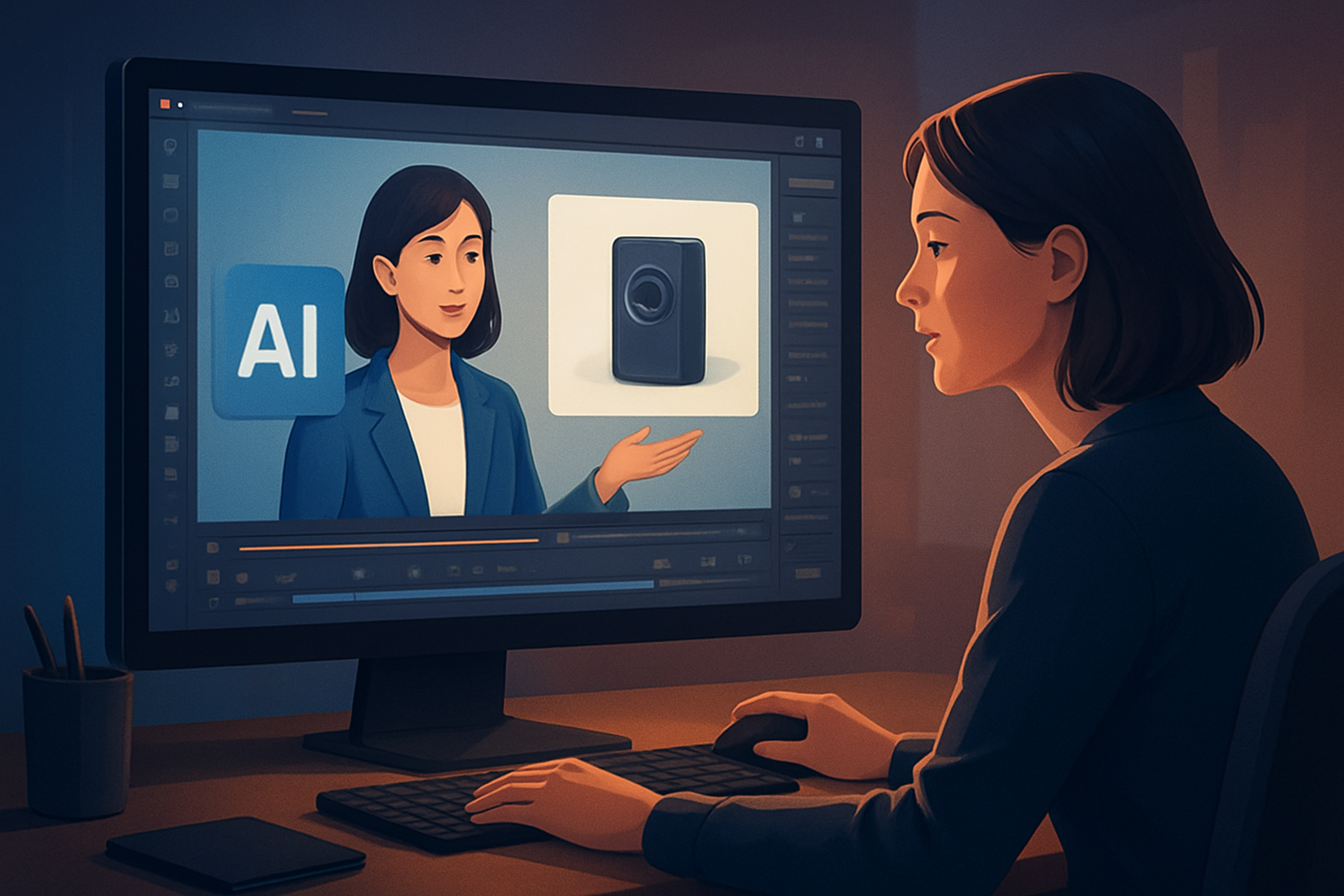
- Faceless presenter options: Use the Avatar project type for a consistent, brand-safe on-screen persona driven by uploaded avatar images plus audio.
- Finishing and packaging: Inside one persistent workspace you can add subtitles, title hooks, overlays, B-roll, and thumbnails. Preview landscape, portrait, and square to create both long-form and Shorts variants without leaving the app.
- Export and publish prep: Use Shorz’s YouTube and TikTok helpers and assets exported from the local project library to publish in your scheduling platform.
Because Shorz stores projects and assets locally, you get repeatable libraries and persistent project history that speed up future episodes.
Quick checklist to save one day per video
- Create a script template and save it.
- Import brand assets and 10 go-to B-roll clips.
- Generate a draft with Text-to-Video using a single style reference image.
- Apply subtitles and three title hooks; export three thumbnails.
- Export 16:9 and 9:16 versions and schedule the shorter cut as a Short.
These few habits scale publishing without adding headcount.
FAQ — Business-channel creators, answered
Q: Can I produce educational demos and product explainers without any on-camera talent? A: Yes. Use Text-to-Video for script-led explainers and the Avatar project type for a faceless presenter. Combine uploaded assets and style images to keep visuals on-brand.
Q: Will I have to rebuild brand treatments each time? A: No. Shorz stores assets locally in a reusable library and supports style reference images to stabilize visual identity across videos.
Q: Can I make both long-form YouTube videos and Shorts without re-editing everything? A: Yes. Preview and export in landscape, portrait, and square within the same project so you can produce multi-aspect outputs efficiently.
Q: Is this workflow usable by a small team or solo creator? A: Absolutely. The app is optimized for workflow compression: faster first drafts and less tool switching make it practical for small teams and solo creators to scale.
Q: Do the tools handle subtitles, hooks, and thumbnails? A: Yes. Shorz includes shared finishing systems — subtitles, title hooks, B-roll, overlays, and thumbnail generation — so the publishing package is ready inside one environment.
Q: Does Shorz rely on cloud storage or external project sharing? A: Shorz stores projects and generated assets locally on Windows, enabling persistent project history and reusable libraries.
Related guides and next steps
- For examples of automation tuned to other niches, see guides for finance and science channels:
- Want a faceless-specific workflow walkthrough with Shorz? Start here:
Ready to publish more faceless business videos?
Set up your script templates, import your brand assets, and compress your production loop into one workspace. Start your faceless YouTube workflow with Shorz and move from idea to publish-ready video faster. Visit the faceless workflow guide to get started now: Faceless YouTube Workflow With Shorz