
The core bottleneck for documentary creators
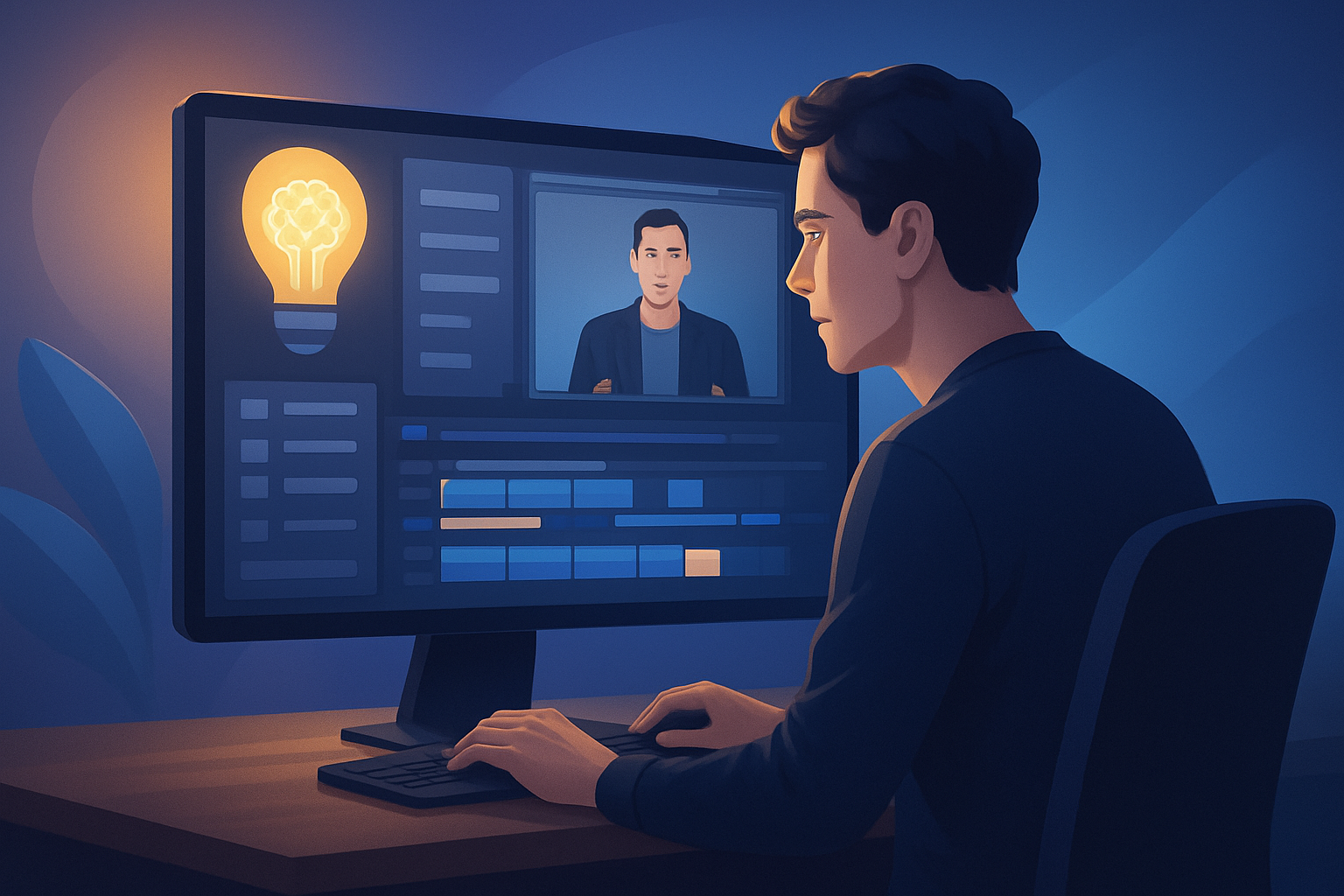
Documentary channels hit the same choke point: research and story assembly move faster than the editing and packaging pipeline. You can finish a tight script and source great archival clips, but turning that material into a publish-ready video — with subtitles, thumbnail, punchy hooks, and short-form repurposes — still takes too many tools and too many manual steps. The result: long lead times, inconsistent episode style, and missed upload windows.
This workflow breaks that bottleneck into repeatable steps so you can reliably produce episodes at scale without sacrificing craft.
Step-by-step workflow: from idea to publish
Pick the story and map intent
- Define angle, runtime (full episode vs highlight), and three narrative beats you need to cover. This scope keeps research focused and the script tight.
Research and capture assets
- Pull articles, video URLs, images, and public-domain footage. Save these in a single folder or intake list so you can batch ingest later.
Ingest and organize into an asset library
- Import footage, images, and audio into your local asset library. Tag assets with clear labels (subject, source, rights, timecodes) so reuse is fast.
Script and timecode draft
- Write a narrated script with scene markers. For documentary shorts, write title hooks and subtitle cues up front so editing can follow the script, not the other way around.
Produce narration (or pick voice)
- Record voiceover, or generate/upload narration. Use a single voice or a small set of voices to maintain continuity across episodes.
Auto-assemble a first cut
- Use a tool that supports script-to-video or auto-edit from footage to create a first draft aligned to your narration and timecodes. Treat this as a scaffold, not the final product.
Finishing pass: pacing, B-roll, and polish
- Replace placeholders, tighten cuts, add B-roll, titles, and subtitle styling. Apply visual polish layers where needed: auto-zoom, face tracking, freeze frames, and color tweaks.
Create publishing assets
- Generate thumbnails, short-form cuts (vertical/ square), GIFs, and teaser clips. Export consistent presets for your YouTube uploads.
Publish, analyze, and iterate
- Upload with metadata (SEO-optimized title, description, chapters). Inspect watch retention and comments to refine future scripts.
Tools needed
- Script and organizing tools: any text editor or note app for outlines.
- Research and asset sourcing: browser, archive access, stock libraries.
- Narration capture: USB microphone or studio-grade recorder; or upload pre-recorded audio.
- Editing and packaging workstation: Shorz (Windows desktop) as a central project workspace, or similar desktop NLEs for heavy custom grading.
- Thumbnail and asset management: tools that can generate and store thumbnails; Shorz can generate thumbnails and store them in your local project.
- Analytics and publishing helpers: YouTube Studio and any scheduling tool you prefer.
For documentary channels focused on script-led, faceless, or repurposed content, Shorz serves as a workflow-compression hub: import your footage and scripts, generate faster first drafts, and keep a persistent local asset library for repeatable output.
Mistakes to avoid
- Skipping the outline: editing without a story map multiplies iteration time.
- Poor labeling of assets: untagged footage becomes a retrieval tax.
- Treating the auto-edit as final: rely on AI to scaffold, then finish manually.
- One export fits all: not preparing vertical/square edits loses reach on Shorts and Reels.
- Ignoring subtitles and hooks: thumbnails and opening 5–10 seconds decide clickthrough.
Optimization tips for YouTube
- Front-load the hook: open with a one-line teaser at 5–10 seconds and repeat it visually.
- Use chapter markers aligned to your narrative beats — easier for viewers and search.
- Optimize thumbnails around a single clear idea; test variations. Shorz can generate and store thumbnails alongside projects to speed A/B workflows.
- Repurpose: export 16:9, 9:16, and 1:1 versions from the same project to cover long-form and social snippets. Shorz previews and exports in landscape, portrait, and square, which simplifies repurposing.
- Keep a consistent visual reference: use style images across episodes so generated scenes and overlays align over time. Shorz accepts style reference images to stabilize visual identity.
How to scale this workflow
- Create episode templates: title hooks, subtitle presets, overlay stacks, and preset B-roll placements that you can apply per episode.
- Build a reusable asset library: store recurring maps, logos, lower-thirds, and SFX in your local project cache. Shorz’s My Assets system keeps generated thumbnails, audio, and downloaded images available for repeat work.
- Batch tasks by role: script batch, record batch narration, then edit batch. This assembly-line approach reduces context switching.
- Automate variant exports: standardize export presets for full episodes and short-form teasers so each project yields multiple deliverables with one pass.
Where Shorz reduces friction in this workflow
- Centralized local workspace: Shorz stores projects and generated assets locally, so your history and reusable libraries are immediately available for repeat episodes.
- Faster first drafts and repeatable output: use Text-to-Video or Auto Edit Video project types to move from script or footage to an edit draft inside one persistent workspace.
- Script-to-video and narration support: Shorz accepts typed scripts and uploaded speech audio, provides voice selection and narration preview, and supports transitions and motion options — speeding alignment between voice and visuals.
- Finishing controls beyond the raw draft: subtitle systems, title hooks, B-roll placement, overlays, borders, music, SFX, and volume mix controls let you polish AI-generated drafts without switching apps.
- Visual polish layers and multi-ratio previews: apply auto-zoom, face tracking, freeze frames, and color tweaks, and preview outputs in landscape, portrait, and square for streamlined repurposing.
- Thumbnail and asset generation: Shorz can generate thumbnails and store them in the same project, reducing friction between edit and publish-ready assets.
- Persistent My Assets library: keep downloaded GIFs, images, audio, and generated thumbnails available for rapid reuse across episodes.
For creators building script-led documentary formats, Shorz compresses the loop from source to publish-ready asset and reduces tool-sprawl so you can publish more consistently. If your channel is more broadly script-driven, see YouTube Automation Workflow for Script-Based Channels. For education-style documentary content, this workflow connects to teaching formats: YouTube Automation Workflow for Education Channels. If your channel blends documentary and brand narratives, these operational patterns are similar to business workflows: YouTube Automation Workflow for Business Channels.
FAQ
Q: Can this workflow handle faceless documentary episodes?
A: Yes. Shorz is specifically suited to faceless and script-led workflows with Text-to-Video, Avatar, and Auto Edit Video project types and strong support for narration, style references, and reusable asset libraries.
Q: Is Shorz a cloud app?
A: No — Shorz is a Windows desktop application that stores projects and generated assets locally, which supports persistent project history and reusable libraries.
Q: Can I make vertical Shorts and full YouTube episodes from the same project?
A: Yes. Shorz previews and exports in landscape, portrait, and square, allowing you to prepare multiple deliverables from the same project.
Q: How do I keep episode quality consistent as I scale?
A: Use consistent style reference images, template overlays, and a maintained My Assets library. Standardize caption and thumbnail presets so each output looks like it’s from the same channel.
Next step (CTA)
If you want a hands-on faceless workflow that compresses scripting, asset reuse, and multi-format publishing into one local workspace, explore how to build a faceless YouTube system with Shorz: Faceless YouTube Workflow With Shorz.