
For creators (beginners) on YouTube who want to publish more faceless content — start publishing this week
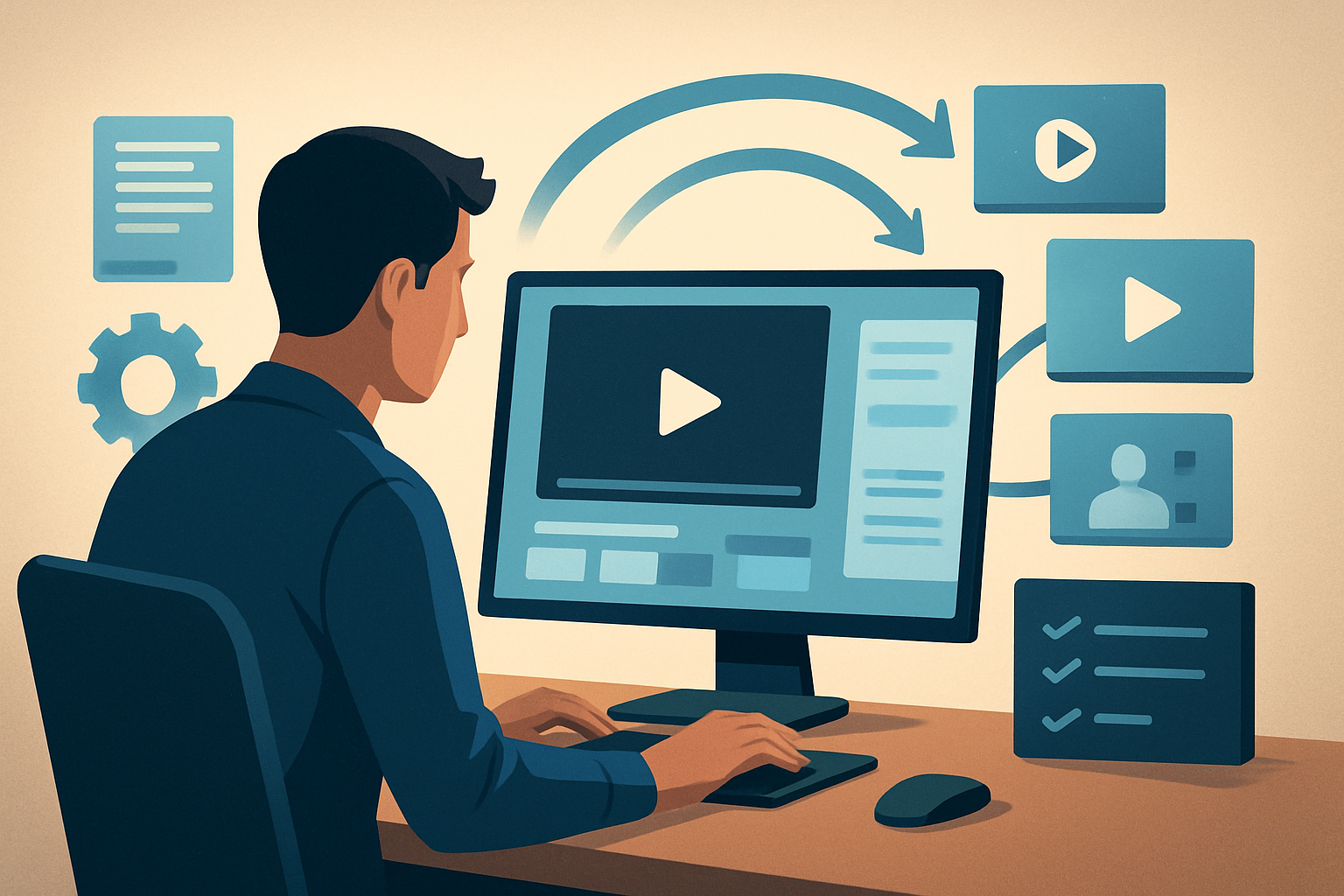
You don’t need a camera, a studio, or perfect speaking skills to grow a YouTube channel. As a beginner creator focused on faceless content for YouTube, your real blockers are idea churn, inconsistent thumbnails/hooks, slow editing, and juggling three or four separate apps. This page gives a practical, no-fluff workflow you can execute this week to move from idea to publish-ready faceless videos — and shows exactly where a single desktop app can compress those steps.
Why this workflow matters right now
YouTube rewards consistency and multiple formats: long-form explainers, Shorts, and repurposed clips. That means more outputs per idea. For beginners that translates to two pressures: produce frequently and appear polished. The fastest path is a repeatable script→visual→publish pipeline that reduces tool switching, keeps brand assets reusable, and gives you editable drafts instead of one-off generators.
If you want niche prompts, inspiration, and example formats, check specialized idea lists for finance, history, and science:
- Faceless YouTube Channel Ideas for Finance
- Faceless YouTube Channel Ideas for History
- Faceless YouTube Channel Ideas for Science
Pain points this workflow solves
- Camera anxiety or no camera at all.
- Overwhelm from learning multiple editors and upload workflows.
- Slow thumbnail + subtitle creation that delays publishing.
- Inconsistent visual identity across formats (landscape, portrait, square).
- Repeating the same setup for each video instead of reusing assets and templates.
Practical workflow you can implement this week (5-day sprint)
Day 1 — Idea + SEO micro-brief (1–2 hours)
- Pick a reliable format (listicle, explainer, myth-busting). Keep topics to 3–7 subpoints.
- Create a 150–300 word script or bullet outline with a 3–5 second title hook for the thumbnail and opening.
Day 2 — Script polish + narration (1–2 hours)
- Finalize script and choose voice strategy: typed narration, uploaded audio, or an avatar-based read.
- Record a quick voice-over or prepare a typed script for text-to-speech; aim for 60–90 seconds for Shorts, 6–10 minutes for standard videos.
Day 3 — Assembly in a single workspace (2–3 hours)
- Import script, audio, and any images into one local project library.
- Use a Text-to-Video or Auto Edit project type to generate the first draft inside one persistent workspace. Include style reference images to stabilize visual identity.
- Add auto-generated subtitles and preview in landscape + portrait to identify framing issues.
Day 4 — Polish and asset creation (1–2 hours)
- Apply finishing layers: title hooks, B-roll, subtle overlays, automatic zooms, freeze frames, and basic color tweaks.
- Generate thumbnails and reuse headline hooks from the video.
- Export a landscape file for YouTube and a portrait crop for Shorts; adjust subtitles and hooks per ratio.
Day 5 — Publish and repurpose (1 hour)
- Upload to YouTube. Use the thumbnail generated in the project.
- Chop the first 15–60 seconds for a Short, export square/portrait versions, and save all assets in the project’s local library for reuse.
This sprint assumes you use one desktop app that supports script-to-video, asset libraries, subtitle finishing, and thumbnail generation — which lets you iterate faster on drafts and reuse templates.
Best-tool criteria for faceless YouTube beginners
When you choose a tool, prioritize:
- Script-to-Video + Auto Edit workflows in one workspace (faster first drafts).
- Local, persistent asset storage for reusable libraries and consistent branding.
- Built-in subtitle, thumbnail, and multi-ratio preview to reduce exports and re-imports.
- Finishing controls (B-roll, overlays, volume mix, auto-zoom) so drafts become publish-ready.
- Support for typed scripts, uploaded audio, and avatar/voice options to match your production style.
Shorz maps directly to these criteria: it’s a Windows desktop video production suite that combines Auto Edit Video, Text-to-Video, Avatar, and Podcast project types in one persistent workspace. It stores projects and generated assets locally (so you build reusable libraries), supports subtitles, hooks, B-roll, overlays, previewing in landscape/portrait/square, and includes thumbnail generation and publishing helpers that speed repeatable output.
For a dedicated walkthrough of a faceless pipeline inside that workspace, see Faceless YouTube Workflow With Shorz.
Where Shorz fits into your stack and the bottlenecks it removes
Typical beginner stack: script doc → voice recorder → image generator → timeline editor → subtitle app → thumbnail editor. Each handoff costs time and introduces inconsistent assets.
Shorz compresses those steps into one desktop workflow:
- Start with footage, script, avatar images plus audio, or dialogue-based formats.
- Use Text-to-Video to build scenes from scripts with style-reference images to keep visuals consistent.
- Finish inside the same project: subtitles, title hooks, overlays, B-roll, and thumbnail generation.
- Preview and export optimized files for YouTube and Shorts without bouncing files between apps.
- Store assets locally for repeatable templates and faster future drafts.
In short: fewer apps, faster first drafts, reusable assets, and less switching.
FAQ — quick answers for beginners
Q: Do I need a camera or actor to start? A: No. You can use Text-to-Video, avatar-based reads, or uploaded audio to produce faceless videos. Shorz supports starting from scripts, uploaded speech, or avatar images plus audio.
Q: Can I make both full-length YouTube videos and Shorts? A: Yes. Previewing and exporting in landscape, portrait, and square ratios is built into the workflow so you can produce both formats from the same project.
Q: How do I keep thumbnails and hooks consistent? A: Use style reference images and the project’s thumbnail generation plus reusable asset libraries to maintain consistent branding across videos.
Q: Will I still need other tools for captions or music? A: Shorz includes subtitle design, music, sound effects, and volume mix controls, which covers most publishing-adjacent needs without additional apps.
Q: Is this approach repeatable for a channel schedule? A: Yes. Local asset storage and persistent projects let you create templates and batch workflows — produce a week’s worth of scripts and run them through the same pipeline for consistent output.
Q: I’m a complete beginner. How steep is the learning curve? A: The recommended sprint is designed to produce a publish-ready video in five short sessions. The value is in repeatability: once you build templates and an asset library, production compresses considerably.
Ready to publish more faceless YouTube content?
If your goal is consistent, repeatable faceless videos with fewer tools and faster drafts, move your script→visual→publish workflow into one workspace. Start the faceless workflow walkthrough and get templates that beginners can use immediately: Faceless YouTube Workflow With Shorz.